Between stories and history: the mirror of contemporary art

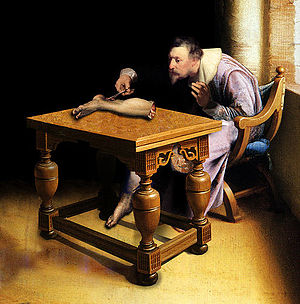
This week, when I was researching some sources on late seventeenth-century iatrochemistry, I ran across a reference to the work of Philip Verheyen (1648-1710), a farmhand-turned-anatomist. I had never heard of him before, but thought his work might be interesting for me, so I did what every person, including an academic, does these days: I googled him. And clicked the first link: a Wikipedia page. A bit surprised that a quite detailed Wikipedia page in English, complete with painted portrait was dedicated to a relatively obscure seventeenth-century Flemish anatomist, I started reading. It all seemed genuine enough, with references to the work of known Dutch historians of medicine such as Lindeboom. Until I read that Verheyen had dissected his own leg and suffered phantom pains after it was amputated, and that this

‘…prompted him to take up a career in anatomy in order to probe and understand this phenomenon and also write the deeply personal series of notes (1700-1710) that may be translated either as “Notes on My Amputated Leg,” or “Letters to My Amputated Leg,” the former seeming more probable, while the latter is more in keeping with the tone of the notes.’
Verheyens 1693 ‘Corporis Humani Anatomia'was reprinted 21 times and translated in several languages.

Verheyens 1693 ‘Corporis Humani Anatomia’ was reprinted 21 times and translated in several languages.

I bet you clicked the link to the Letters, didn’t you? I did! And it’s a stub. Some people may now think ‘well, duh, of course, you shouldn’t just believe everything that’s on Wikipedia.’ Obviously you shouldn’t (as I keep stressing when I’m lecturing too), but by now I have read so many weird and wonderful things about early modern medicine and chemistry that a small part of me still wondered whether there was some truth to this story. So I looked Verheyen up in Picarta (the Dutch national library catalogue, a sort of Worldcat). He did indeed exist, wrote quite some interesting things on anatomy, but no letters to his leg. The other references I could check online do mention the amputated leg, but no dissection or letters.

Then I continued reading the Wikipedia page and noticed that the author says that Verheyen studied at the Leids Universitair Medisch Centrum – indeed an existing institution, but a profoundly twentieth-century institution. A bit annoyed with this nonsense now, I scrolled back up and had a closer look at the ‘painting’ of Verheyen dissecting his own leg. Now I immediately saw it was not a painting at all, but a digitally composed image – I actually recognized ‘Verheyen’ as one of the onlookers in Tulp’s Anatomical lesson. When I magnified the image, I noticed the bare ‘stump’ of the leg under the table, and couldn’t help laughing. Someone had put a lot of thought into this!

Rembrandt, The Anatomy Lesson of Dr. Nicolaes Tulp , 1632. Oil on canvas. Mauritshuis, The Hague.
Rembrandt, The Anatomy Lesson of Dr. Nicolaes Tulp , 1632. Oil on canvas. Mauritshuis, The Hague.

Philip Verheyen Dissecting His Amputated Leg. According to Wikipedia: "Anonymous. From the collection of Pieter Deheijde."

Philip Verheyen Dissecting His Amputated Leg. According to Wikipedia: “Anonymous. From the collection of Pieter Deheijde.”

Back to Google, I found that the sixth hit was a link to a project of a New York-based artist, Sreshta Rit Premnath. It turns out that the ‘painting’ and the entire Wikipedia page on Verheyen are part of an art project. In a response to a message written by someone who did not notice the inconsistencies, Premnath readily admits that the Wiki is largely fictitious, and the portrait a digital creation. Yet it is not some silly joke; Premnath raises some serious questions with this project. As he puts it himself:

‘Do we not all perceive the world through images that are given to us through books and media; and through the socio-political contexts in which we are brought up? The painting “Philip Verheyen Dissecting His Own Amputated Leg” does not actually exist. It is a composite image I have created in order to explore this fragility of truth and authenticity.’

I think the way Premnath has chosen to raise these questions is quite brilliant, as even people who are generally considered to be relatively smart and critical-minded (historians like myself, the author of the message Premnath is responding to – who is apparently a medical doctor) are initially willing to believe that Verheyen really dissected his own leg and wrote letters to it. This may seem silly, but on the other hand open-mindedness is also required to be a good academic. This balancing of open-mindedness and critical thinking also reminded me of another exploration of the fragility of truth and authenticity I really love: David Wilson’s Museum of Jurassic  Technology in Los Angeles. This museum leaves visitors wondering which of its exhibits are real – yet they are all wonderful. I had the pleasure of visiting the museum in 2010, but if you can’t, do read Lawrence Weschler’s Mr. Wilson’s Cabinet of Wonder. Pronged Ants, Horned Humans, Mice on Toast, and Other Marvels of Jurassic Technology.

Although I admit I was a little annoyed when I initially discovered I was being ‘fooled’ with the Verheyen Wiki, I think projects like Premnath’s and Wilson’s are more than necessary to keep everyone, including, or maybe especially us academics, sharp and critical about what we understand as true and authentic and factual. Contemporary art can hold up a mirror, and show us how we often construct stories unthinkingly – and that it is the task of the historian to undo these constructions and think them through and reconstruct them into histories. Only to humbly realize that those histories are also stories, of course.
Location, location: the influence of the local climate on health

Last week (and much of the weeks before), as most of you in the northwest of Europe may have noted, it was hot. While I was in the UK and spent most of my time in thoroughly air-conditioned libraries, it did not bother me much. But then I came back home, and for all kinds of practical reasons it was more convenient to work from my decidedly un-air-conditioned, early twentieth-century house than to make the four-hour round trip commute to my office at the University of Groningen, or to hide in other libraries.

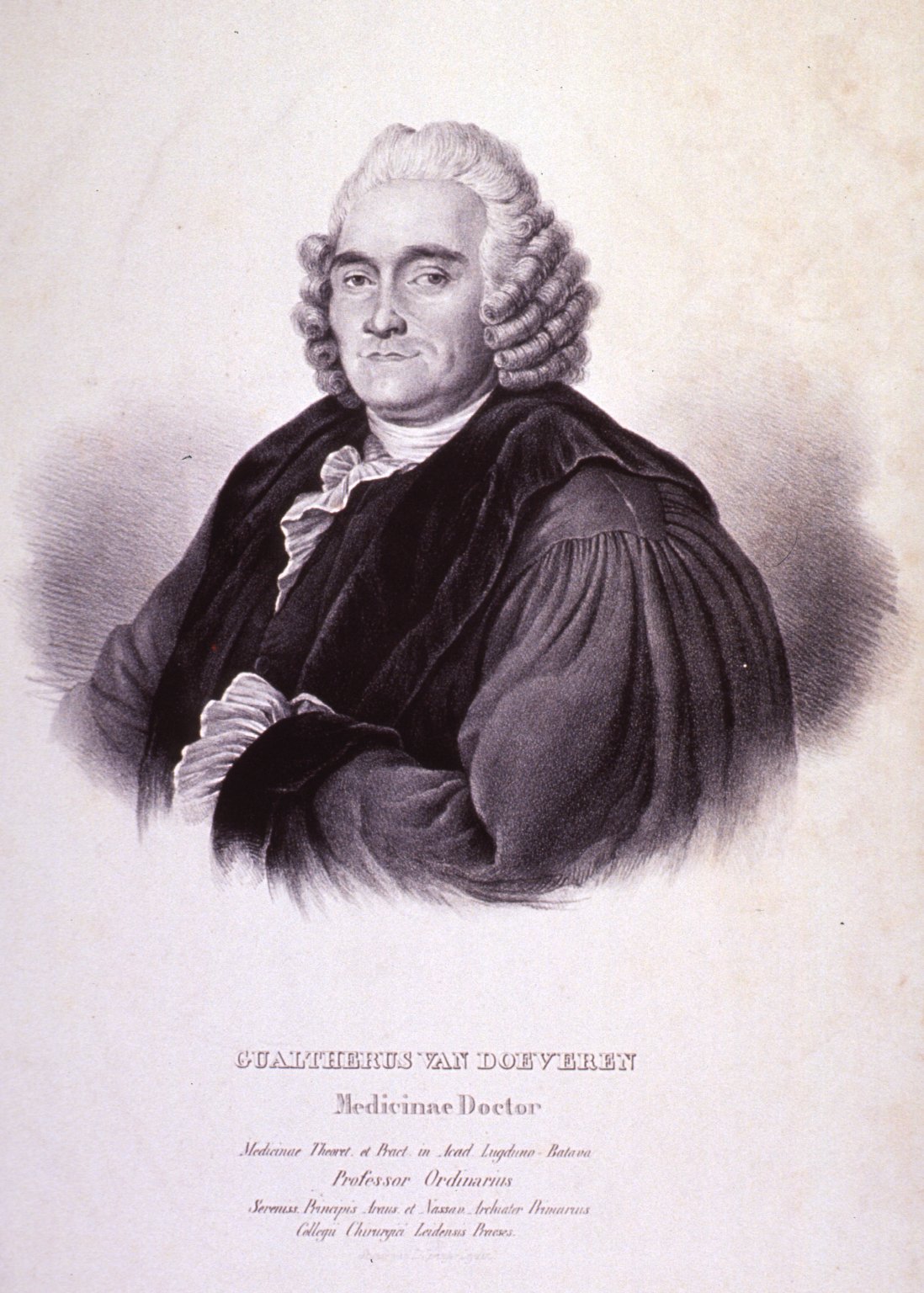
Professor Wouter van Doeveren, 1730-1783

Professor Wouter van Doeveren, 1730-1783

So there I was. I was supposed to be writing a paper, but seemed to suffer from something I’ll unscientifically define as ‘cooked brain.’ Nothing sensible seemed to come out of my hands or mind. Maybe I should have gone to Groningen after all, as I suddenly remembered an oration by an eighteenth-century Dutch professor of anatomy who taught at Groningen and later at Leiden. Wouter van Doeveren (1730-1783) in 1770 gave an oration on the beneficial climate of the city of Groningen – it was his farewell to the city where he had worked for sixteen years.

Today, Dutch people still joke about the north of the Netherlands being colder than the south or even the middle, which seems rather ridiculous as the distances are tiny, the landscape is rather unvaried, and the entire country has a mild marine climate (Cfb in the Köppen-system). However, there is some truth to those quips: on the website of the Royal Dutch Meteorological Institute (KNMI), there are maps of the long-term average temperatures in the Netherlands, and these do show that on average, the west is about a degree Celsius or so warmer than the middle of the country, and the east is even a bit colder in winter, whereas in summer it is the other way around.  So although it is more of a west-east divide than the popular idea of a north-south divide suggests, there are climatological differences in this tiny country.

View of the city of Groningen from the side of the Aa gate (the Aa is a river), 1750-1850.  The subscript reads: "This is Groningen, jewel of the  history journals because of its heroics. Famous for its diligence and rich growth, it is called the country's crown jewel." Courtesy of Leiden University Library.

View of the city of Groningen from the side of the Aa gate (the Aa is a river), 1750-1850. The subscript reads: “This is Groningen, jewel of the history journals because of its heroics. Famous for its diligence and rich growth, it is called the country’s crown jewel.” Courtesy of Leiden University Library.

Van Doeveren had no KNMI maps, yet he did know that ‘the moderate marine climate of Groningen is beneficial for the body.’ The rather cool climate, according to his lecture, was good for people, as the cold enhances the solidity and resilience of the fibres of the body, strengthening it and thus multiplying the force of life.[1]  As he readily admitted, his ideas were based on the work of Hippocrates, who argued that studying the climate in various regions and cities and its influence on different bodies could provide information on the benefits of certain climates to human health.[2] However, Van Doeveren disappointedly noted that although the climate and the natural resources of Groningen made it a rather healthy place, the population still wrought havoc on itself by choosing a diet of ‘corned or smoked meat and fish, pickled vegetables, old and sharp cheese,’ and unhealthy drinks like ‘acerb, sharp wines, strong spirits, and watery extracts.’[3]

With Van Doeveren’s wise words in mind, I made a fresh salad and a jug of not-too-watery lemonade, put my fan on my desk, and got on with it. Next time we have a heat wave, I’ll take the salad and the lemonade to Groningen!


[1] Doeveren, Wouter van. Sermo Academicus De Sanitatis Groninganorum Praesidiis, Ex Urbis Naturali Historia Derivandis / Dictus Cum Iterum Fasces Academicos Poneret. Groningae 1770, p.9-10.

[2] Hippocrates, De Aeribus, Aquis et Locis

[3] Doeveren, Wouter van, 1770, p. 34.

Mercury and lead in bones: an outing to bioarcheology

Keeping a blog has many benefits, and one of them is the fact that you can share your research with people from around the world. Occasionally, this means an academic colleague from a field quite different to my own gets in touch, because they have read something on my blog that is relevant to them. It’s really exciting when that happens, because it broadens both our horizons. So you can imagine I was happy to receive an email from bioarcheologist Dr Tamara Varney last spring.

Dr Varney is the PI on a project that looks at toxic trace elements, especially lead, in colonial populations, analysing human bone from colonial cemeteries. She recently excavated the site of a Royal Naval Hospital in Antigua, and found that the bones of one individual contained low lead levels, but very high mercury levels.

Antigua is a Caribbean island. The graveyard of the Royal Naval Hospital is near the historical site of Nelson's Dockyard, in the south-east of the island.

Antigua is a Caribbean island. The graveyard of the Royal Naval Hospital is near the historical site of Nelson’s Dockyard, in the south-east of the island.

Dr Varney’s team includes another bioarcheologist, Dr Treena Swanston (University of Saskatchewan), a bone tissue-imaging specialist Dr David Cooper (University of Saskatchewan), and a chemist/synchrotron beamline scientist, Dr Ian Coulthard (Canadian Light Source). (I actually had to look up that last one too) However impressive this team is, they wanted to connect with historians with a similar interest to collaborate. Was I interested? Of course!

Ever since that first email, we have been exchanging information from our respective expertise on a regular basis, and we hope to publish something together at some point in the future. Right here, I’d like to give a taste of what a historian of medicine can do with the data of a bioarcheologist, as I feel many academics are still a bit reticent about cooperating with someone from an entirely different field.

My initial thought was that remains with high mercury levels may have come either from a patient treated with large amounts of mercury-based drugs, as was common at the time in venereal disease and many other ailments, or from a professional who worked with mercury, such as a doctor. Yet ‘a doctor’ is so general it is obviously of little use to anyone, so when I was in London to give a talk at the National Maritime Museum in April, I seized the opportunity to check some papers on the Royal Naval Hospital in Antigua to see if I could find some information on the use of mercurial drugs there.

Nelson's Dockyard, Antigua, today.

Nelson’s Dockyard, Antigua, today.

The papers kept at the NMM were property of Sir John Borlase Warren (2 September 1753 – 27 February 1822), commander in chief of the North America Station of the Royal Navy from 1807-1810 and in 1812-1814.[i] The station was based at Halifax Naval Yard in Novia Scotia. This apparently put him in charge of the appointments of personal at, amongst others, the Antigua Naval Hospital. During the 18th century, Antigua was used as the headquarters of the British Royal Navy Caribbean fleet, so it made sense to have a Royal Naval Hospital there.

From the correspondence at the NMM, it appears that James Veitch M.D. was surgeon of the Antigua Naval Hospital, and that he was in charge of the hospital and the distribution of drugs among the patients. Veitch also published some work on medicine, most notably A letter to the Commissioners for Transports, and Sick and Wounded Seamen, on the non-contagious nature of the yellow fever.[ii]  In it, he writes the following:

I decidedly agree with Mr. Pym, as to the rapidity of convalescence and restoration to

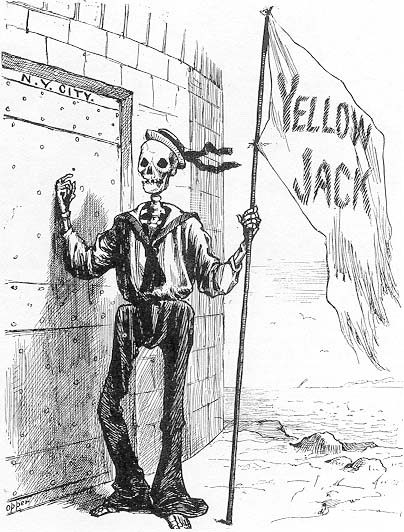
Yellow fever was a big problem in harbours in the eighteenth and nineteenth century. Here 'Yellow Jack' is shown knocking on the city gates of New York City. NY suffered a yellow fever epidemic in 1793.

Yellow fever was a big problem in harbours in the eighteenth and nineteenth century. Here ‘Yellow Jack’ is shown knocking on the city gates of New York City. NY suffered a yellow fever epidemic in 1793.

health, after the cure of this fever; and instances, of men relapsing, were not known at the Hospital at Antigua; particularly, where we had the good fortune to receive the patient early, and we consequently had an opportunity of thoroughly subduing the fatal movements of this disease; by decisive evacuations. When patients however, were admitted to the Hospital, who were improperly denominated convalescent, and whose treatment had not been managed with a decisive hand; and where determinations to internal organs, of a chronic nature, had taken place, these often suffered relapse:, but such relapses could not be called Yellow fever; they were symptomatic and yielded to mercurials.”[iii]

To cure the frequently occurring yellow fever, Veitch advised a combination of purging, bleeding and mercury.[iv]

This shows that mercurial drugs were used routinely at the Antigua Naval Hospital in the early nineteenth century. The remains with high mercury levels are therefore probably from a patient who had been repeatedly and for a long time been treated with mercurial drugs, although for a historian it is impossible to tell whether this was for yellow fever or another disease. However, a bioarcheologist has the tools to investigate this further. As Dr. Varney puts it: “Given that bone is a really slow tissue in terms of turnover and healing, and that it is only affected by a low percentage of diseases in terms of readily visible lesions, the combination of this imaging and chemical analysis with historical information has the potential to reveal and verify information that could not be otherwise.” To be continued!


[i] Letters and Papers Relating to Hospitals 1808 – 1814. Paperwork relating to the building work at Halifax naval hospital, and also of expenditure at Halifax and Melville Island hospitals. There are also letters regarding hospitals at Bermuda and Antigua, as well as correspondence from the transport office. 11th June 1808 – 31st June 1814. NMM WAR/19

[iii] Ibidem, 109-10.

[iv] Ibidem, 131 cont.

Wine with a metallic aftertaste: food safety in the eighteenth century

Previously, I have written about mercury and some other metals being used as drugs throughout the eighteenth century, and we have also seen that most physicians were well aware of the potential danger of metals to the human body. Some of them even actively warned against metals in their academic work. This week, I found a treatise by the Leiden professor of chemistry H.D. Gaub (1705-1780), which appeared in the transactions of the Dutch Science Society in 1754, on testing wine for lead.[1]

Lead poisoning was quite common in the early modern period, as lead was used in eating and cooking utensils, in water containers and in alcohol distillation equipment. Moreover, lead was sometimes deliberately added to wine to make it sweeter. This caused fast and severe, often lethal lead poisoning, that was also known as Poitou colic (after a particularly widespread case of lead poisoning by wine in the French city of Poitou in the 1720s) or painter’s colic  – painters were prone to lead poisoning because of the high levels of lead in many paints.[2]

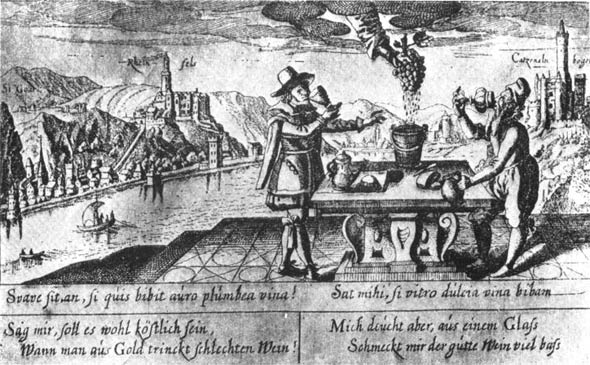
A seventeenth century view of the Rhine Valley. The Latin legend reads: "is it sweet to drink bad wine from a golden cup? - I'd rather drink good wine from a glass". Note that when applied to wines, "plumbeus", literally leaden, has the meaning of poor or bad, here and in classical Latin. Source: http://www.nicks.com.au/Index.aspx?link_id=76.1221

A seventeenth century view of the Rhine Valley. The Latin legend reads: “is it sweet to drink bad/leaden (‘plumbea vina’) wine from a golden cup? – I’d rather drink good wine from a glass”. Source: http://www.nicks.com.au/Index.aspx?link_id=76.1221

By the mid-eighteenth century, it was commonly known that adding lead to wine was a dangerous practice, and as Gaub wrote, governments in wine-producing countries had set heavy penalties on it. However, his own tests revealed that even some of the Rhine and Moselle wines commonly drunk in the Netherlands contained lead anyhow. For a while, it was thought that lead could be detected in wine by mixing spiritus salis (hydrochloric acid) through it. But Gaub did his own tests and came to different conclusions.[3] It turned out that only lead dissolved in vinegar became visible as a white powder or turbidity when spiritus salis was added. Other forms of lead in wine, such as sugar of lead (lead acetate), lead white, minium (red lead), and lead oxide remained undetected.

The only reliable way to test wine for the presence of any form of lead, Gaub argued, was the already known method of using Atramentum Symphateticum, a tincture of arsenic sulphur and quicklime. In order to test wine for lead, a little wine was poured into a white cup and some drops of the Atramentum Symphateticum were added. If the wine went cloudy with a yellowish-red, brown or black colour, lead was present – the darker the colour the higher the lead contents. If the turbidity was whitish, there was no lead in it and it was safe to drink.

Gaub finished his treatise with some words of comfort. Although lead pollution did occur in Rhine and Moselle wines, it was not very common because of the laws and regulations in the German lands. Wine lovers should be wary of extremely sweet wines, as well as those that were uncharacteristically dark for their age, and wines of supposed high quality offered at a very low price. In case of doubt, they could rely on the Atramentum Symphateticum test, which, by the way, also worked for butter, which in times of scarcity was apparently also sweetened with lead.

This little treatise shows that an academic physician and chemist like Gaub also applied his knowledge for very practical purposes, and wanted to spread it for the common good. Moreover, it shows the historic realm of seemingly contemporary issues such as food safety and the relevance of science for society. Think about that, next time you have a glass of wine or put some butter on your bread!


[1] Gaubius, H.D. “Over de Loodstoffen. Aanwysing Van een Middel waar door men het Schadelyk mengsel van Loodstoffen in de Wynenmet genoegsaame zekerheid kan ontdekken.” Verhandelingen uitgegeeven door de Hollandsche maatschappye der weetenschappen te Haarlem 1 (1754): 112–126.

[2] Also see Eisinger, J. “Early Consumer Protection Legislation: a 17th Century Law Prohibiting Lead Adulteration of Wines”. Interdisciplinary Science Reviews 16, nr. 1 (maart 1991): 61–68.

[3] Gaubius (1754): 115.

Dark tourism past and present

Last Saturday, the Travel section of my Dutch newspaper, the Volkskrant, featured a short article on ‘dark tourism,’ the phenomenon of people leisurely visiting places that are reminders of death, suffering or the macabre. Examples are Auschwitz, the Anne Frank house and graveyards, but also the Body Worlds exhibitions. According to Philip Stone, director of the recently established Institute for Dark Tourism Research (iDTR), dark tourism is increasing in popularity, something he ascribes not only to marketing but also to secularization. As churches empty, people seek other places to think about life and death, good and evil, he suggests in the article.

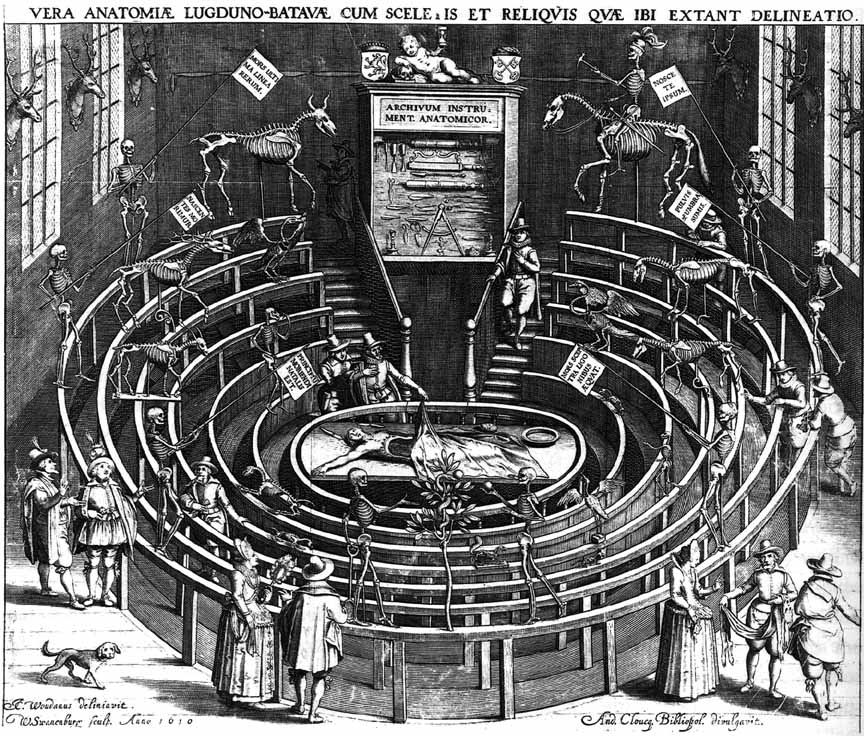
However, if I learned anything while writing a PhD thesis about eighteenth century anatomical collections, it is that there is nothing new about dark tourism. In seventeenth- and eighteenth century Leiden for example, the anatomical theatre and its collections were one of the biggest tourist attractions. Guides were published in Dutch, Latin,

Visitors can be seen strolling around and pointing out things to each other. The dissected body on the table is unlikely to have been there during the summer tourist season in reality, as dissections were normally only performed during the cold winter months.

Visitors can be seen strolling around and pointing out things to each other. The dissected body on the table is unlikely to have been there during the summer tourist season in reality, as dissections were normally only performed during the cold winter months.

English and French, and paying visitors could join guided tours. These visitors could of course use the opportunity to learn something about human anatomy, but they were also treated to stories relating to the exhibits, such as that of the skeleton of a woman who had been condemned to death for theft. This Catherine of Hamburg allegedly bought a length of ribbon at a market in Amsterdam, measuring from one ear to the other – a standard length. However, after the purchase, she claimed that one of her ears was nailed to the pillory in Hamburg. [1] Although visitors found stories like this one hard to believe sometimes, most of them did not seem to mind a little stretching of the truth if there was a moral lesson or just entertainment.[2]

Title page of an English visitor's catalogue to the Leiden Anatomical theatre, 1727.

Title page of an English visitor’s catalogue to the Leiden Anatomical theatre, 1727.

Yet in the course of the eighteenth century, the attraction of this kind of ‘dark tourism’ was changing, at least in the case of the Leiden anatomical collections. For example, an English visitor who described his stay in Leiden in 1775 stated that “…you must not fail to see the Anatomy-chamber”, but adds this is mainly because that is where “they preserve the money of Egypt; Pagan idols, –foreign dresses, birds from China, &c, &c.” Not a word about anatomical preparations or moral lessons.[3] This indicates that the anatomical theatre to tourists had become a cabinet of curiosities instead of a place to learn about human anatomy and morality. The curators also realized this, and from the last decades of the eighteenth century, the collections were partly handed over to other institutions, such as the newly established museum for antiquities, and the anatomical theatre slowly changed from an open-for-all public attraction into a closed teaching institution.[4]

This story about the Leiden collections shows that what is considered ‘dark’ can change over time, and that the reasons people visit these places vary. Then as now, some want to contemplate life and death or morality, others want to be entertained or learn something about the human body or human behaviour. My guess is that in order for a ‘dark tourism attraction’ to be successful in any time, visitors need to be able to relate to what is on show, or the people whose stories are told by and in that place – hence the massive success of the Anne Frank house and Body Worlds. As long as the story is a universal human one, and credible, visitors will continue to come.


[1] Uffenbach, Conrad Zacharias. Merkwürdige Reisen durch Niedersachsen, Holland und England. 3 vols. (Frankfurt/Leipzig, 1753).

[2] Knoeff, R. ‘The Visitor’s View. Early Modern Tourism and the Polyvalence of Anatomical Exhibits’, in L. Roberts (ed.), Centers and Cycles of Accumulation in and around the Netherlands during the Early Modern Period  (Münster: LIT Verlag, 2011), pp. 155-175, 166-7.

[3] Anonymous. Holland: A Jaunt to the Principal Places in That Country. London: W. Hay, 1775.

[4] M.M.A. Hendriksen, H.M. Huistra & H.G. Knoeff, ‘Recycling Anatomical Preparations’, in: S. Alberti and E. Hallam (eds.) Medical Museums, Royal College of Surgeons of England. (Order here) Also see Hendriksen, M. Aesthesis in Anatomy. Materiality and Elegance in the Eighteenth-Century Leiden Anatomical Collections. PhD thesis, Leiden University, 2012.

Alchemy on the Amstel: a visit to the Ritman Library

In September last year, I heard of the Amsterdam Ritman Library or Bibliotheca Philosophica Hermetica for the first time. I had been wanting to see the exhibition ‘Alchemy on the Amstel‘ (until 20 September 2013) ever since, and last week I finally got a chance. On a sunny afternoon I cycled to the library, hidden away in a side street of the Prinsengracht, a stone’s throw from the Westerchurch.

In stark contrast to the hustle and bustle outside, just metres away from the throngs of tourists queuing for the Anne Frank house, the Ritman Library is an oasis of silence. Founded by the Amsterdam businessman and maecenas Joost R. Ritman (1941), the library holds a unique collection of hermetic books and manuscripts with a focus on the Christian tradition. The collection covers areas as diverse as alchemy, Rosicrucian works and Gnostics, from the Middle Ages to the present day.

The current exhibitions at the Ritman Library, ‘Alchemy on the Amstel: On Hermetic Medicine in the Golden Age of the Dutch Republic’ and ‘A Curious Tsar: Peter the Great and Discovering the Secrets of Nature in Amsterdam’ (in conjunction with the exhibition ‘Peter the Great: an Inspired Tsar’ in the Amsterdam Hermitage), are small but rich. They give the visitor a quick but thorough insight in Amsterdam as a centre of trade and knowledge in the seventeenth and early eighteenth century. Concise bilingual catalogues help the visitor to put the works on display in context.

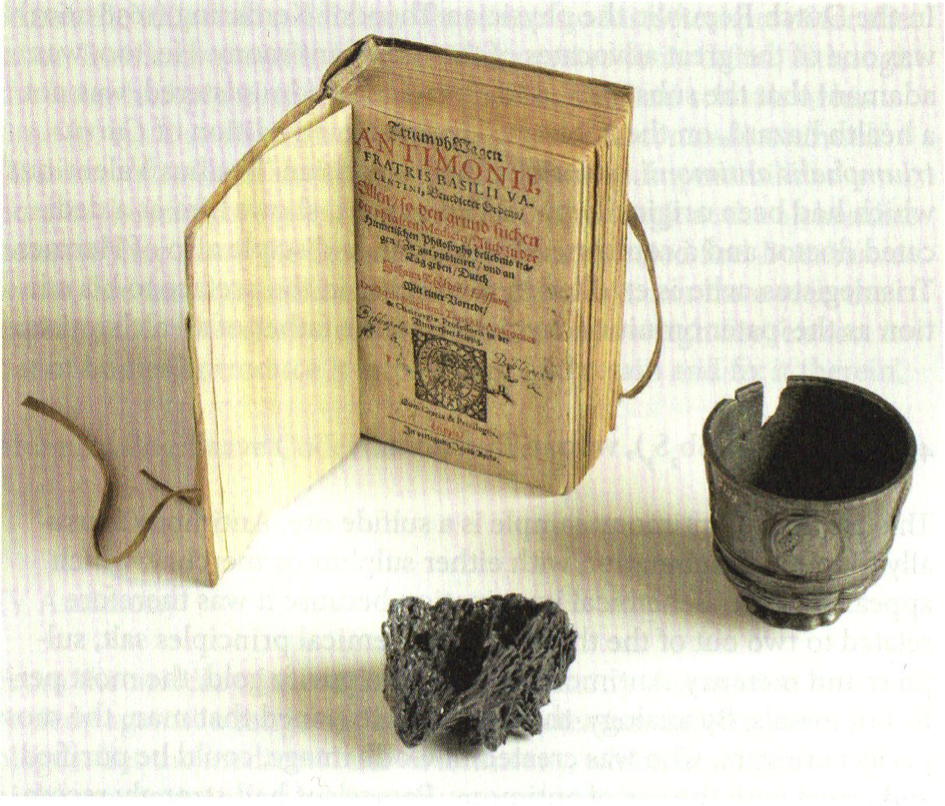
Although this is a library exhibition, there are not just manuscripts, books, and other printed works on display. In one of the display cases, a small cup and a stony clump of material with a metal-like shimmer caught my eye. They turned out to be an antimony cup and a lump of antimony (Sb2S3), a lustrous grey metalloid often found in ores together with either sulphur or mercury. This combination appealed to alchemists, as sulphur and mercury were considered the basic alchemical elements. Moreover, as antimony could cleanse the most precious metal, gold, from impurities, alchemists reasoned it could also cleanse and cure God’s most precious creature, created after his own image: man.

Antimony ore, antimony cup and Basilius Valentinus, Triump-Wagen Antimonii, Leipzig 1604. C. van Heertum, Alchemy on the Amstel. On Hermetic Medicine. Amsterdam: In de Pelikaan, 2012.

Antimony ore, antimony cup and Basilius Valentinus, Triump-Wagen Antimonii, Leipzig 1604. C. van Heertum, Alchemy on the Amstel. On Hermetic Medicine. Amsterdam: In de Pelikaan, 2012.

Hence Paracelsus (1493-1541) and many of his followers advocated the use of small amounts of antimony in iatrochemical drugs, although they were well aware of the fact that it is highly poisonous. Antimony cups like the seventeenth-century one on display at the Ritman library were used since antiquity to make antimonial wine by soaking regular wine in it for one or more days. This antimonial wine was a tried emetic, but antimony cups were forbidden in England and France for much of the seventeenth century as the use of a wine too acidic would result in a lethal concoction. This prohibition was sometimes circumnavigated by creating antimony cups from tin with a small amount of antimony.[1] In France antimony cups became legal once more in 1658, after Louis XIV was cured from typhoid fever with antimonial wine.[2]

The aim of this this exhibition, dispelling some of the misconceptions surrounding alchemy with a general audience, is certainly met. And for historians of alchemy and chemistry, the Ritman Library is a true treasure trove. Like many other cultural institutions, the library faced major financial challenges over the past years. All the more reason to support it by paying a visit – you will not be disappointed.


[1] StClair Thomson, “Antimonyall Cupps: Pocula Emetica or Calices Vomitorii”, Proc. Roy. Soc. Med., Vol. XIX, no. 9, 1925, 123-8.

[2] C. van Heertum, Alchemy on the Amstel. On Hermetic Medicine. Amsterdam: In de Pelikaan, 2012, 49.

Making medicine: early modern laboratory equipment

As regular readers know, I have a weakness for the material culture of early modern science and medicine. There are scores of brilliant museums full of the stuff, but there is a downside: the most common, most intensively used objects tend not to be in museum collections. That makes sense of course: their common and utilitarian character meant they were discarded when broken, damaged, or no longer in use. Most of the spaces in which these objects were used are long gone too: they were continuously modernized, or given a new destination and transformed beyond recognition. Unfortunately, that means that in some instances, such as that of the early modern laboratory, hardly anything of a material culture remains. There are some rare exceptions, and an exciting project based at UCL studies the archaeological remains of early modern laboratories.

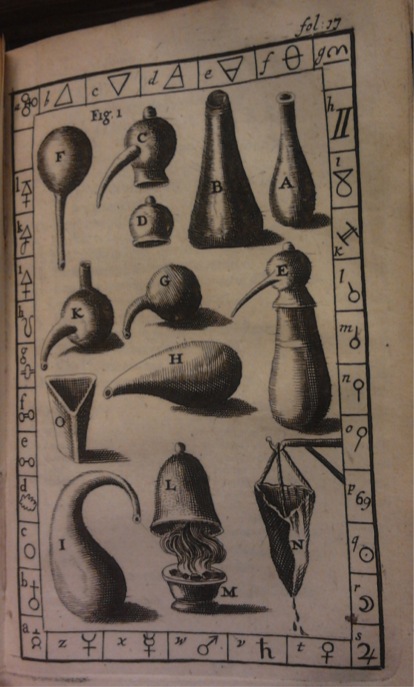
However, my current research focuses on the Low Countries, and as far as I know, no laboratory has been dug up here so far. What remains are individual flasks, bottles, jars and retorts. Fortunately, the (ideal) lay-out of early modern chemical laboratories and their inventories in the Netherlands have been mapped in print to some extent. Take for example Steven Blankaart’s 1678 De nieuwe hedendaagsche stof-scheiding ofthe chymia (The new contemporary separation of substances or chymia).

From: Steven Blankaart,  De nieuwe hedendaagsche stof-scheiding ofthe chymia (1678)

From: Steven Blankaart, De nieuwe hedendaagsche stof-scheiding ofthe chymia (1678)

Blankaart, an Amsterdam physician and natural philosopher who had started his career as an apothecaries’ apprentice, published this book based on a variety of authors and his own experiences, to advocate chemical experimentation. In it, we find not only detailed descriptions of the properties and processing of all kinds of substances, but also four plates depicting a range of laboratory equipment. Blankaart’s book, written in Dutch, was aimed primarily at professional artisans such as apothecaries, assayers, and artists who made their own pigments. This was a flourishing trade in the early modern period, as also appears from the program of this fascinating conference, which I unfortunately will not be able to attend.

By the late seventeenth century, chemistry was also slowly becoming an academic discipline. In 1669, a chemical laboratory was created at Leiden University. There are no maps or depictions of this laboratory, but it probably looked quite similar to the laboratory installed at Utrecht University in 1695.

First chemical laboratory at Utrecht University, founded 1695. From: J.C. Barchusen, Pyrosophia (Leiden, 1698).

First chemical laboratory at Utrecht University, founded 1695. From: J.C. Barchusen, Pyrosophia (Leiden, 1698).

That the laboratory in Leiden was used intensively shows from the report written by the newly appointed professor of chemistry Herman Boerhaave in 1718. He proposed to renew the ovens, as almost half a century of intense use had made them unfit, and the curators happily agreed.[1] The lists Boerhaave provided of equipment that had been ‘inherited’ from the previous chemistry professor and of equipment and supplies that had to be purchased give a good idea about the inventory of the laboratory circa 1718: iron rings, hooks, spoons, spatulas, and pliers, copper kettles, bowls and buckets, bellows, a variety of glass flasks and bottles, six brickwork ovens, wood, coal and peat, and a well-instructed laboratory assistant.[2]

To be continued!


[1] ” Vernieuwingh van de ovens, die in het Laboratorium door lang gebruyck onbekquaem sijn geworden.” From Boerhaave’s report to the Curators of the University, August 1718, in Molhuysen 1913, vol. 4, p. 150*.

[2] Ibidem, p. 150*-2*. Although the latter admittedly is not exactly an object, Latour would argue they are all actors, so why not list him as well.

Ninzin root – or an eighteenth-century placebo

In the seventeenth century, Europeans were very interested in the new plant species discovered in faraway regions. In the Netherlands in particular, the spice trade with the East Indies flourished: nutmeg, ginger, pepper and cloves were staples.  However, there were also less common plants. In the letters that the famous Dutch scholar and physician Herman Boerhaave wrote to a friend and colleague in Austria, I noticed several mentions of a root called ‘Ninzin,’ which was extremely rare and expensive. Here’s a translation of what Boerhaave wrote (unfortunately the responses of his friend Bassand were lost):

I am sorry about the enormous price of these trivia, one ounce of Ninzin root, and not even the best, has been sold for forty Dutch guilders. I would barely buy them for a trifle. That is how silly they are.[1] 

‘China root’ or ginger, from An Embassy for the East India Company, Johan Nieuhoff, 1669, p. 213.

‘China root’ or ginger, from An Embassy for the East India Company, Johan Nieuhoff, 1669, p. 213.

Apparently Bassand, Boerhaave’s friend, had asked him to buy some Ninzin root for him, but Boerhaave thought this was ridiculously priced: indeed, 40 Dutch guilders in 1718 would be about € 437.23 today![2] However, it seems Bassand was determined to get himself some of the stuff, as over four years later Boerhaave wrote to Bassand:

In all of Holland only one spice trader has the real Ninzi root, but this greedy scoundrel does not even want to give half an ounce, before he has been paid 27 guilders: so the rich are sent away empty handed. I, however, do not appreciate it more than the roots of sweet fennel, which it resembles.[3]  

In the subsequent letter, almost six months later, it turns out Bassand has sent Boerhaave 27 guilders through a mutual acquaintance, and Boerhaave has sent him half an ounce of Ninzi root in return.[4] It is not until 1728 that Boerhaave writes more about the Ninzi root and why he thinks so little of it, but when he does, it is clarifying:

The root of the Chinese Nin-Zeng or Ginzeng, or Japanese Nisi is the most important thing used by the rich for afflictions of the heart, and for afflictions of pre-hysterical and pre-epileptic nature; in Asia, China, Japan and Tartary it is so highly esteemed, that its users are promised a long, fertile, and healthy life. I have tried it with several patients. And what is true of it? Idle chatter, no more. To me, its smell, taste, nature and power appear to be very similar to that of the root of the common fennel. For an ounce of real radix, 25 to 30 Dutch guilders are paid. Princes are given half a drachm, as an infusion with water, wine, or some similar fluid. The price is a recommendation. Things that are sold for high prices are more effective, and so the rich are sent away empty-handed.[5] 

By now, it is clear that what Boerhaave was writing about was ginseng root, indigenous to parts of North America and Asia. However, ginseng did not grow in the East Indies, but mainly in China and Japan. Although the Netherlands did have trading posts there in the first decades of the eighteenth century, Chinese and Japanese officials strictly controlled the trade, whereas in the East Indies the Dutch grew spices themselves. Hence the outrageous prices and the tinge of exotic exclusiveness of ginseng in early eighteenth-century Europe.

Although ginseng is now much cheaper and widely available, we still like to think it has special qualities. One of the biggest Dutch tea brands today sells a range of teas labelled ‘herbal goodness.’ The bags of green tea with ginseng and guarana are marketed claiming that ginseng enhances concentration: ‘Discover the power of ginseng!’ Well, for the current price it won’t hurt to try, although it might be an acquired taste.


[1] G.A. Lindeboom (ed.), Boerhaave’s Brieven aan Bassand. Haarlem: Erven F. Bohn, 1957. Letter of 23 September 1718, p. 64. All translations mine.

[3] G.A. Lindeboom. Letter of 3 December 1722, p. 85. The words ‘so the rich are send away empty handed’ refers to Luke 1:53, a verse about God’s mercy for the poor and his punishment of the greedy.

[4] Ibidem. Letter of 6 May 1723, p. 86.

[5] Ibidem. Letter of 24 June 1728, p. 170-1.

Harelip, devil’s bite?

In many eighteenth-century collections of human anatomy, one or more preparations of animals with cleft palate, a congenital defect still commonly known as harelip, can be found.

A foetal pig showing division of the spine, mandible and tongue, with a marked cleft in the palate. From the collection of John Hunter (1728-1793). Collection of the Royal College of Surgeons of England, London.

A foetal pig showing division of the spine, mandible and tongue, with a marked cleft in the palate. From the collection of John Hunter (1728-1793). Collection of the Royal College of Surgeons of England, London.

A quick exploration of the history of cleft palate tells us more about why these animal preparations were included in collections of human anatomy at a time when comparative anatomy was not a discipline yet. We probably all know or have seen somebody who has a corrected cleft lip, as the incidence is about one in 700 births nowadays, making it fairly common. (In comparison: the incidence for neural tube defects such as spina bifida is one in about 17,000 births, and for anencephaly –the absence of a large part of the brain and the skull- one in 10,000.)

Nowadays cleft palate can be treated successfully, but in the eighteenth century this was not at all the case. Most children born with a severe cleft palate died of malnourishment within weeks because of feeding problems. In less severe cases, sometimes an attempt was made to correct the cleft lip.

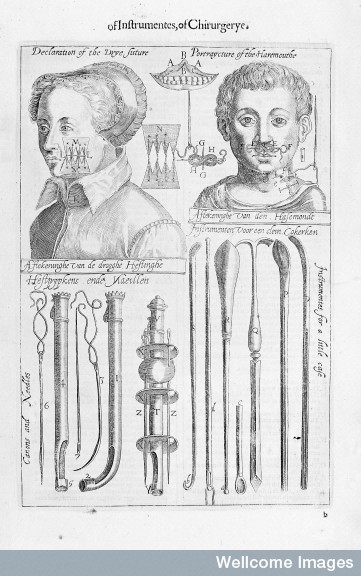
J. Guillemeau, operations on the cheek, for harelip. Wellcome Library, London

J. Guillemeau, operations on the cheek, for harelip. From “The Frenche chirurgerye,” 1597. Wellcome Library, London

However, pre-anaesthetic, this was a rather cruel and potentially traumatizing procedure. The patient was held tight by an assistant, while the surgeon cut open and subsequently stitched together the two halves of the lip with thin needles. The needles then remained in the lip and were taken out one by one over the course of days or even weeks.[1]

Even if the operation was successful, a child with a corrected cleft lip faced a lifelong stigma. Now known to be caused genetic or environmental factors, or a by a combination of both, in the eighteenth century cleft palate was still commonly explained by the theory of maternal imagination.[2] This meant that people believed that birth defects were impressed on the foetus during pregnancy because the mother had seen, imagined, or done something. In the case of cleft palate, explanation varied from the mother having unchaste thoughts to her having had intercourse with the devil. After all, in classic iconography as well as popular believe, the hare represents lust, probably because of its speed of reproduction, and sometimes the devil itself. No wonder many sufferers of cleft palate find the term ‘harelip’ offensive!

Many eighteenth-century anatomists and physicians already realized that it was unlikely that the maternal imagination, or morals for that matter, could influence the foetus. After all, deformations like cleft palate also occurred in animals, which have neither imagination nor reason. To make their point, these men started to collect animals with birth defects that were also found in humans, and they recorded case histories to prove the maternal imagination was a fantasy. For example, Dutch anatomists Eduard Sandifort wrote of a new born girl with a severe cleft palate that she was her parents’ eleventh child, the first with such a defect, and that they were good Christians.[3] However, the idea of the maternal imagination influencing the foetus was hard to eradicate: even in 1889, the authors of an encyclopaedia of children’s diseases still felt it was necessary to note that

“Pre-natal maternal impressions are often claimed as the cause of these marks [birth marks], and many cases are cited which lend a considerable degree of plausibility to the claim. It is more rational, however, to explain these cases by the principle of coincidence.”[4]


[1] A. Nuck, Operationes Et Experimenta Chirurgica (Leiden: Samuel Luchtmans, 1733), p. 73-77.

[2] M. Hagner, ‘Enlightened Monsters’, in William Clark, Jan Golinski and Simon Schaffer (eds.) The Sciences in Enlightened Europe (Chicago & London: The University of Chicago Press, 1999), pp. 175-217.

[3] E. Sandifort, Observationes Anatomico-Pathologicae 2 vols. (Leiden: P. v.d. Eyk et D. Vygh, 1777-1781), vol. II, liber IV, caput III, 29- 38.

[4] Cyclopaedia of the diseases of children, medical and surgical. The articles written especially for the work by American, British, and Canadian authors. John M. Keating (ed.), (Philadelphia: J. B. Lippincott company, 1889), p.104.

Medicine with a silver lining

In my research of early modern chemistry and medicine, I am currently focussing on the use of metals, particularly quicksilver. But other metals were also used widely, and the use of gold and silver is quite fascinating, in particular because it never disappeared entirely. In the late seventeenth century, silver was used to create aqua fortis or strong water, a kind of nitric acid.[1] This was used to treat skin conditions, and to dissolve gold and make dyes.  Silver was also used in medication that was supposed to strengthen the heart, but in 1747, Wouter van Lis refuted this: in his pharmaceutical handbook, he wrote that it is useless to add silver or gold to these drugs, as our body heat is incapable of solving them.

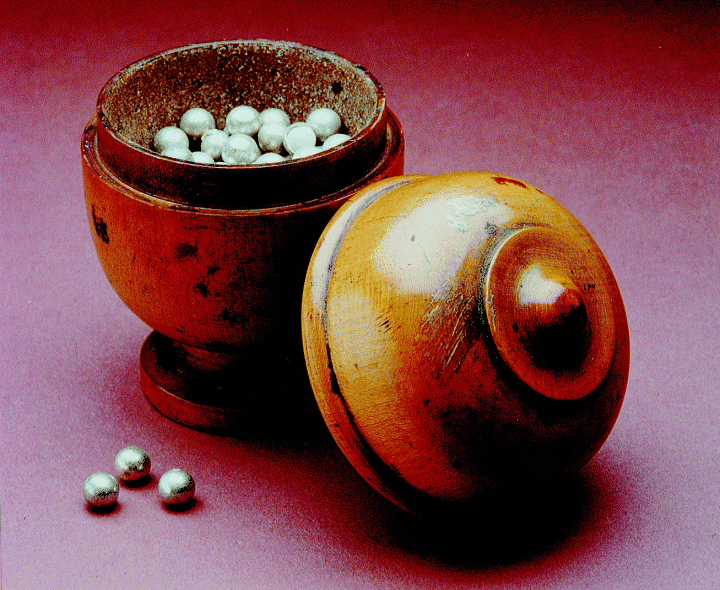
Van Lis had a point indeed: pure metallic silver and gold are not really toxic for the human body, as they are relatively resistant to corrosion by bodily processes. That is why eating small amounts of gold and silver leaf is harmless: European food additives E174 and E175 are simply silver and gold. This decorative use of precious metals was also familiar to Van Lis and his contemporaries: he noted that ‘…sometimes medication, like pills, is covered in silver or gold leave, to make it more pleasant to the eye.’[2] This covering was done in so-called pill silverers: spherical wooden containers on a small foot, into which silver or gold leave was put, moistened pills were added, and gentle swirling produced nicely silver or gold plated pills.

Pill silverer, probably nineteenth century.

Pill silverer, probably nineteenth century.

However, this innocuousness only goes for pure metallic precious metals, and not for compounds containing them, such as silver salts and colloidal silver. In the twentieth and twenty-first century, these have been advertised as a cure for a variety of ailments. They are sold as food supplements, thus avoiding the strict regulations that apply to medication. A sustained intake of these silver compounds can lead to argyria or silver poisoning.[3] Although very rare and unlikely to interfere with vital functions, it gives the sufferer an irreversible bluish-silver hue. The most famous recent case is probably Paul Karason, an American man who turned permanently blue after taking large amounts of a home made silver compound to cure his arthritis. Probably not exactly the kind of silver lining you’re looking for in a cure…


[1] Bisschop, Jan. Pharmacia Galenica & chymica, dat is Apotheker ende alchymiste ofte distilleer-konste : begrijpende de beginselen ende fondamenten der selver. Verdeylt in acht boecken, tot onderwijsinge der apothekers / Door een liefhebber derselver konste Nieu licht der apotekers en distilleerkonst. Antwerpen: Reynier Sleghers, 1667. p.361-2 http://books.google.nl/books?id=MFRAAAAAcAAJ&printsec=frontcover&hl=nl&source=gbs_atb#v=onepage&q&f=false.

[2] Van Lis, Wouter. Gualtheri van Lis Pharmacopoea galeno-chemico-medica… = Meng- schei- … / Wouter van Lis Meng- schei- en geneeskonstige artseny-winkel. Amsterdam: Jan Morterre, 1747. p.103: “Het is vergeefs, dat Silver en Gout by Hartsterkende Geneesmiddelen gemengt worden, alzoze door onze warmte niet kunnen ontbonden worden, nochtans bekleet men zomtyts Geneesmiddelen, om ze voor het oog aangenamer te maken, By voorbeelt Pillen, met Silver of Blatgout.”

[3] White, J. M. L., Powell, A. M., Brady, K. and Russell-Jones, R. (2003), Severe generalized argyria secondary to ingestion of colloidal silver protein. Clinical and Experimental Dermatology, 28: 254–256. doi: 10.1046/j.1365-2230.2003.01214.x