Weapon salve, tooth hangers and other ‘sympathetic’ cures

In my previous blog post I wrote about the use of Lapis Judaicus, a ‘stone’ used to cure bladder stones, as a form of sympathetic medicine. Sympathetic medicine is a term used to refer to historical medical practices in which a cure is ‘sympathetically’ related to the condition it treats; it relates to, involves, depends on, acts on or is effected by ‘sympathy’, a real or supposed affinity, correspondence, or occult influence, as the OED puts it. The more I read and thought about it, the more I realized that the relationship between cure and disease in sympathetic medicine can take many different forms. We can roughly distinguish between material and immaterial sympathetic medicine. The latter would be spells and incantations, but as my regular readers will understand, I am more interested in the various appearances of material sympathetic medicine. So far, I have been able to distinguish three different kinds, but I’d love to hear about other examples!

Similarity of colour, shape or substance
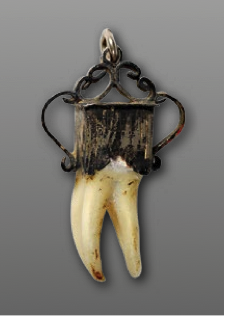
19th century, silver and tooth. Deutsches Medizinhistorisches Museum Ingolstadt, Inv.-Nr.  12/028. Photograph: M. Kowalski.

Hanger to cure toothache. 19th century, silver and tooth. Deutsches Medizinhistorisches Museum Ingolstadt, Inv.-Nr. 12/028. Photograph: M. Kowalski.

Probably the most common and widespread were cures based on the idea that substances similar in colour, shape or substance to the body part, bodily fluid, or cause of the patient’s misery would make a good cure. Well into the eighteenth century, apothecary handbooks were full of recipes containing predominantly red ingredients that were prescribed to strengthen the blood or the heart. Similarly, snake-like grasses were recommended to cure snakebites, powdered human skull to alleviate a headache, et cetera. Another curious example of this ‘similarity principle’ I saw in an exhibition at the Charité Museum in Berlin last year: a nineteenth-century human tooth in a silver hanger, to be worn around the neck to cure toothache.

The cause as the cure
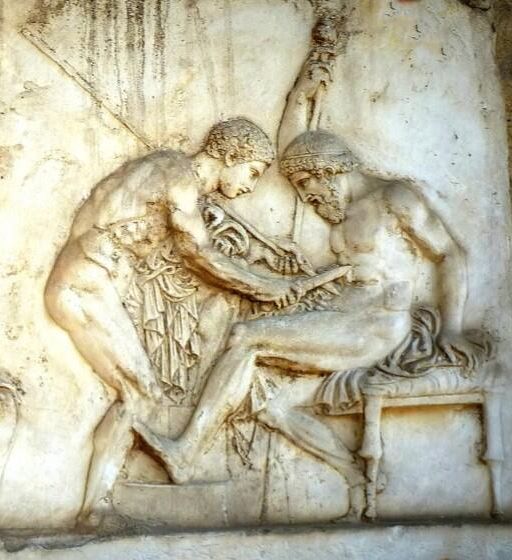
A marble relief from Herculaneum. Achilles scrapes rust from his spear into the wound of Telephus. Source: http://www.monsalvat.no/grkmyths.htm

A marble relief from Herculaneum. Achilles scrapes rust from his spear into the wound of Telephus. Source: http://www.monsalvat.no/grkmyths.htm

Another strain of material sympathetic medicine is that in which the cause of the ailment is also used as the cure. The oldest example I know of is described in the classical legend of Telephus, who was wounded in battle by Achilles’ spear. The wound only healed when scrapings from the spear were applied to it. It is this same principle that underlies a nineteenth-century paramedical practice that  is still used by some today, namely homeopathy. In my book, I also mention an eighteenth-century poem in which Achilles’ spear is used as a metaphor for the budding practice of inoculation, but when you think about it, that’s not entirely the same of course: inoculation is preventive medicine.

The pars pro toto treatment

The third kind of material sympathetic medicine I call the ‘pars pro toto kind’, for want of a better name: treating bodily material of the patient (like excrements) or the object or substance that caused the ailment rather than the patient himself. The most famous early modern example I know about is weapon salve: a substance applied to the weapon that caused a wound, rather than to the wound itself. It was already hotly debated by the seventeenth century, as has been described in detail in this blog post by Issei Takehara as well as in Dutch by professor Mart van Lieburg, and it had all but disappeared by the eighteenth century.

Do you have a favourite example of an early modern sympathetic cure? Please share!
The Jew’s Stone: dissolving kidney stones

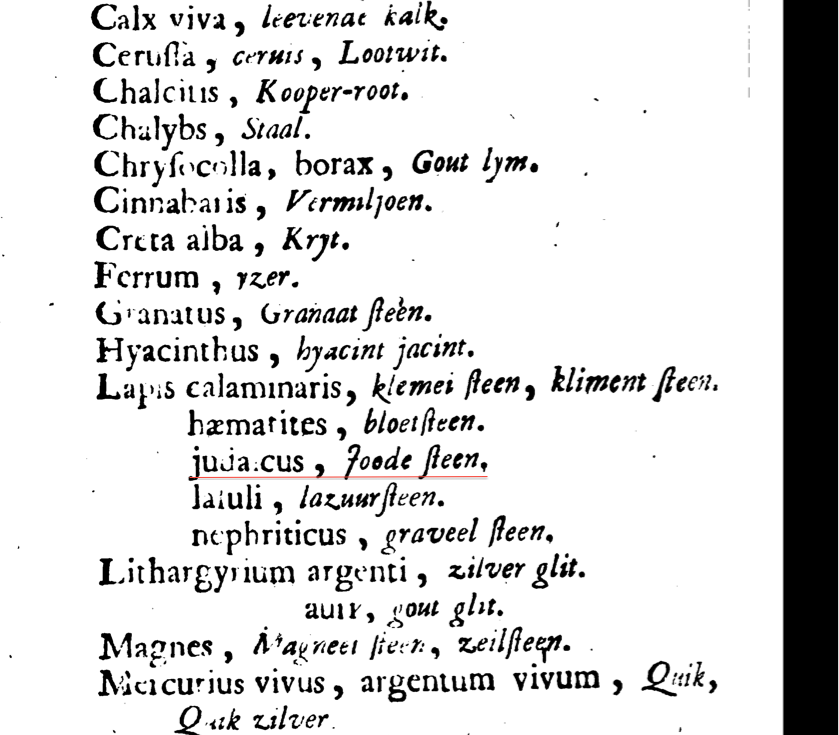
Lapis judaicus listed in Pharmacopoea Roterodamensis galeno-chymica, of Rotterdamsche galenische en chymische Apotheek, 1735.

Lapis judaicus listed in the
Pharmacopoea Roterodamensis galeno-chymica, of Rotterdamsche galenische en chymische Apotheek, 1735.

Last week, I attended an excellent workshop on Gems in Transit, organised by Michael Bycroft. In my paper, I discussed the slow but steady disappearance of gemstones from eighteenth-century medicine and pharmacy. On one of my slides I showed a page from an eighteenth-century Dutch city pharmacopeia listing which minerals an apothecary should keep in his shop, to illustrate that gemstones were still a standard ingredient. One of the other participants, reading the list, asked me: “What’s Lapis judaicus or Jew’s stone?” Good question. I had assumed it was an iron ore, as it was listed alongside Lapis haematitis and Lapis lazuli – both metal ores in a sense, and as I was focussing on gemstones for this paper, I had not investigated it any further.

Jew's stones and crinoid stems, depicted in Michaelis Mercati,  Samminiatensis Metallotheca. Rome:Jo. Mariam Salvioni, 1717-1719.

Jew’s stones and crinoid stems, depicted in Michaelis Mercati, Samminiatensis Metallotheca. Rome: Jo. Mariam Salvioni, 1717-1719.

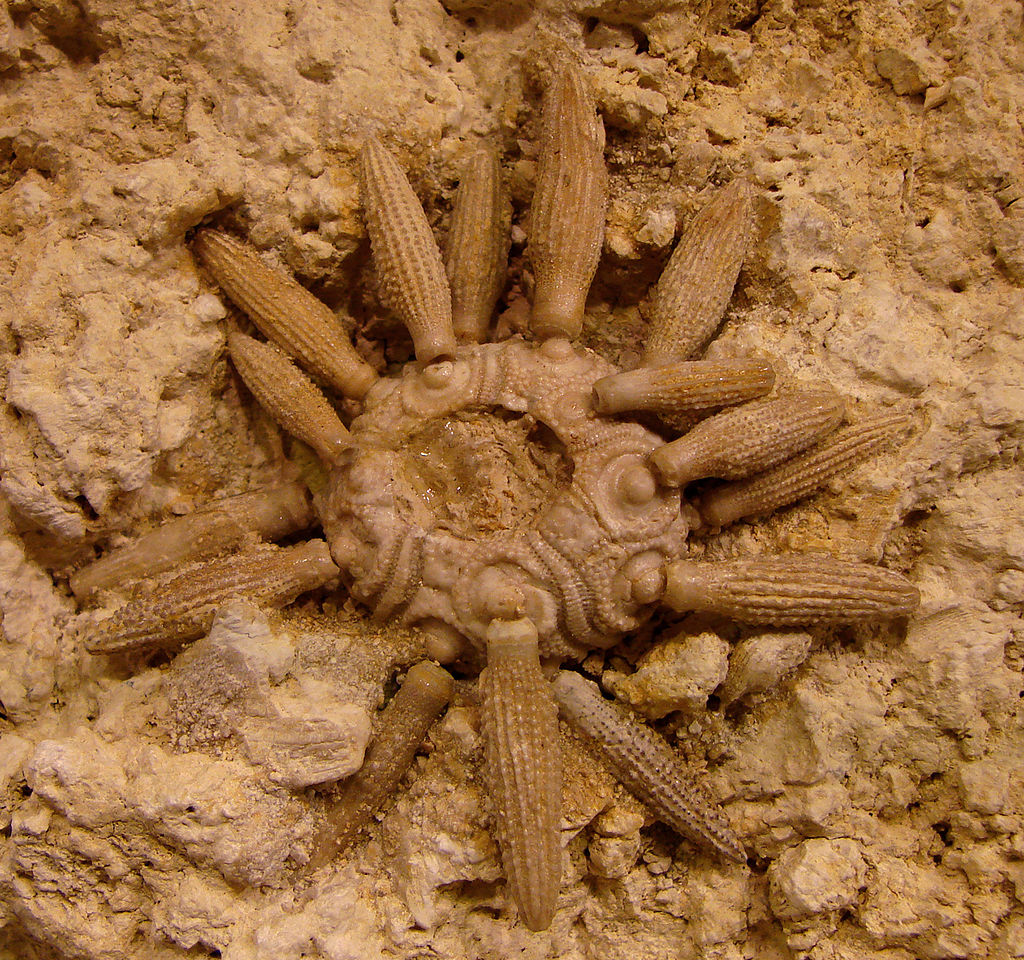
Yet now I was curious, and a quick search shows that Lapis judaicus is something different altogether: namely the spines of certain cidaroid echinoids (a sort of sea urchins), in particular the now extinct Balanocidaris, a kind of pencil urchin. Christopher Duffin has published an article on the history of the medicinal use of the Jew’s Stone, from which it appears that from Roman times until the eighteenth century, recipes circulated recommending the ingestion of powdered or shaved Jew’s Stone in water as a cure against kidney stones.[1] He suggests that this was a case of sympathetic medicine, in which a cure is materially related to the condition it treats; i.e. animal eyes to cure an eye disease in humans, a dissolved, vaguely kidney-shaped ‘stone’ to dissolve kidney stones. The name Jew’s stone probably referred to Judea, were most of these fossils were found – although they occur around the entire Mediterranean.

A Balanocidaris marginata fossil. Source: Wikimedia Commons

A Balanocidaris marginata fossil. Source: Wikimedia Commons

What surprised me even more though was that one of the first links I found was to a recent article in the Journal of Ethnopharmacology, which described a study in which patients with kidney stones were treated with 2 g of Lapis judaicus powder in hard capsules per day for 10 weeks. In total, sixty patients with kidney stones were included in the double-blind randomized clinical study. Thirty patients received the Lapis judaicus capsules and thirty others received a placebo for the same period. The size of the kidney stones reduced significantly in the drug group; in nine patients, the stone was even completely dissolved.[2]

Ethnopharmacology is concerned with the documentation of indigenous medical knowledge and the scientific study of indigenous medicines, or in this case rather historical medical knowledge and medicine, to contribute to modern medicine. This is not as far-fetched as it may seem – the Lapis judaicus study is not the only recent example of a historical pharmaceutical recipe that proved effective in clinical trial. Earlier this year, researchers at the University of Nottingham found that a medieval eye remedy containing onion and garlic killed MRSA bacteria. Although medical doctors were quick to point out that something that works in a clinical trial can be very hard to translate into an effective, commercially available drug, these cases suggest that historical pharmaceutical recipes may be more relevant for the present than we think.

[1] Duffin, Christopher. J. ‘Lapis Judaicus or the Jews’ stone: the folklore of fossil echinoid spinesProceedings of the Geologists’ Association, Volume 117, Issue 3, 2006, 265–275.

[2] Faridi, P. et al, ‘Randomized and double-blinded clinical trial of the safety and calcium kidney stone dissolving efficacy of Lapis judaicus.’ Journal of Ethnopharmacology, Vol. 156, 28 October 2014, 82-87.

A taxidermy excursion

A stuffed crocodile in Sevilla cathedral

A stuffed crocodile (?) in Sevilla cathedral

In the eighteenth-century anatomical collections that I studied for my book, Elegant Anatomy, I occasionally found preparations of animals. These animal preparations were primarily used to gain a better understanding of birth defects that also affect humans, like cleft palate and anencephaly. The ones I saw were mainly wet and dried preparations, and seemed to have no relation whatsoever to the endless numbers of ‘stuffed animals’ in nineteenth-century natural history collections. This piqued my curiosity, and in my spare time I started reading on the history of taxidermy (‘arranging skin’). It could be argued that taxidermy had been around in some form or other for centuries, if you count in Egyptian (animal) mummies and the odd medieval crocodile in a church – the latter was probably a reference to the biblical Leviathan.[1]

Dr Pat Morris with Joanna Ebenstein, Walter Potter's Curious World of Taxidermy (Constable and Robinson, 2013)

Dr Pat Morris with Joanna Ebenstein, Walter Potter’s Curious World of Taxidermy (Constable and Robinson, 2013)

French explorer Pierre Belon described a rather crude method for preserving the skin of birds in his 1555 Observations, but taxidermy only truly became an art form in the nineteenth century, when travellers wanted to preserve their hunting trophies, stuffed exotic birds became a desirable home decoration, and naturalists started to see the educational value of preserved animals.[2] The most curious offshoot of the practice is probably the anthropomorphic taxidermy of Walter Potter. Although many people now categorically reject killing animals for hunting trophies (and rightly so if you ask me), Victorian taxidermy has become a collector’s item, and taxidermy is still important for contemporary museums of natural history and education purposes.

As I am interested in he skills underlying material culture, I wondered whether taxidermy was difficult to learn, and whether techniques and materials had changed much since its nineteenth-century heyday. That is how I recently ended up in a nature education centre for forty-eight hours, taking an introductory taxidermy workshop with the Dutch Society of Taxidermists. I didn’t really know what to expect – a bunch of guys who usually spend their weekends stuffing animals in their sheds maybe? It was a pleasant surprise to find a team of both male and female instructors ranging in age from early twenties to late sixties, and a similarly varied group of participants eager to learn the basics. Students, nurses, IT consultants, artists, foresters, researchers, shop assistants, farmers, a gallery owner, a surgeon, all fascinated by the possibility of giving a death animal a second life.

My First Squirrel

My First Squirrel

In the Netherlands, all indigenous animals are protected by law, and can only be preserved by a certified taxidermist upon gaining a police declaration. Therefore the animals used for instruction during the weekend were either ‘pests’ (grey squirrels, muskrats, moles, skunks) or tropical birds bred in Europe that died from natural causes. After selecting our animals and an introductory lecture on Friday night, we got to work on Saturday. After making an incision on the back or belly of the animal, the skin has to be carefully separated from the subcutaneous facia. The skull has to be taken out and cleaned thoroughly, as this is included in the artificial body on which the skin is mounted. The artificial body is made using wire, straw, yarn and clay, with the measures and shape of the skinned body as a starting point. The skin is washed, tanned and dried, and glass eyes are put into the skull. Subsequently the skin is fitted onto the artificial body, adding and removing straw and clay to reach the desirable effect. Finally the skin is carefully stitched close and the animal mounted on a pedestal or branch.

Although it all sounds pretty straightforward, it is a very precise job, and it is incredibly difficult to obtain the desired result. I am pretty happy with how my squirrel came out, but I had help from experienced instructors, and she’s certainly not the prettiest piece of taxidermy. Of course I grilled the instructors about how they learned themselves, and the answer was without exception: practice. Taxidermy is truly an art in the Aristotelian sense: a skill that can only be learned by doing. Of course there is theoretical knowledge about materials and rules involved, but the actual taxidermy is mostly tacit knowledge. Interestingly, when I compared what I had learned to early twentieth-century taxidermy handbooks, I noticed that the process has not changed substantially since – but fortunately the arsenic formula formerly used to preserve the skin has been replaced with healthier alternatives since. I doubt that I will be able to commit to becoming a professional taxidermist – but a fascinating excursion it was!

[1] A lot of entertaining stories and theories circulate about the presence of stuffed crocodiles in churches, yet the theory that these ‘monsters’ were seen as the embodiment of the biblical Leviathan seems to make most sense. See i.e. Amelia Thomas, ‪The Zoo on the Road to Nablus: A Story of Survival from the West Bank. PublicAffairs, 2008.

[2] For an introduction on the history of taxidermy, see Pat Morris, Taxidermy. Art, Science, and Bad Taste. MPM Publishing, 2010.

Publish or perish

This blog post is long overdue, mostly because of a number of publications that needed finishing. Although I enjoy blogging a lot, if I want to stay in work as an academic I need to publish academic books and papers – ‘publish or perish’. There is a lot of discussion going on both in the Netherlands and internationally right now about the pressure to publish as much as possible in a relatively short time. Read more here (in English) and here (in Dutch) for example. Personally, I do feel that pressure too of course, but I enjoy writing the academic publications and I try to make time for other things I find important – like this blog.

Long story short, although it might seem a bit strange to list academic publications on a blog I started primarily to inform a broad audience about my research, this is what takes up most of my time, so I figured it would not be so strange to devote a post to it for once. Three of these publications came out recently and a fourth is on the way, so here comes some shameless self-advertising:

BoekMy book on the eighteenth-century Leiden anatomical collections, Elegant Anatomy, is based on my PhD thesis and now available from Brill. I’d like to use the opportunity to thank everyone who helped me once more, especially the two reviewers who helped me tremendously with their constructive comments and the lovely people at Brill.

Another result from the ‘Cultures of Collecting‘ research project in which I wrote my thesis is a wonderful collection of essays, The Fate of Anatomical Collections, skillfully edited by my former supervisors, Rina Knoeff and Robert Zwijnenberg. It is now available from Ashgate and contains many fascinating contributions – I wrote a small piece on the fate of eighteenth-century bead-decorated preparations of fetuses and babies of unclear origin.

Moreover, I wrote an article about anatomical mercury that is now available online in the Journal of the History of Medicine and Allied Sciences, and which will appear in the printed journal this year.

Last but not least, the article resulting from the same project that originally inspired this blog, my research on nineteenth-century medicine chests in the National Maritime Museum in Greenwich, London, will soon appear in the Journal of Victorian Culture.

If you are interested in reading any of these but don’t know how to get to them please do not hesitate to contact me. If you read the Medicine Chest for fun, I can imagine that you find the above publications a bit too much – don’t worry, I’ll be back with more of the usual ‘light’ reading soon! I also now realize that many of you probably do not know that I also contribute to the fabulous Recipes Project on a regular basis: you can read my blogs for them here.

Coming up next: my adventures in taxidermy…

Anatomy Month: the start of a tradition?

As I am currently very busy finishing some publications, I have had little time for new research the past few months – hence my relative silence here. Therefore I’d like to draw attention to a series of events that I enjoyed very much and which I believe deserves to become a yearly occurrence: the first-ever Dutch Anatomy Month.

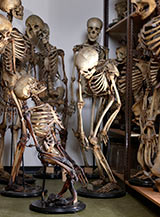
Skeletons affected by disease. Source: Museum Vrolik.

Skeletons affected by disease. Source: Museum Vrolik.

Two weeks ago, I was invited to give a talk during an anatomy weekend at Museum Vrolik in Amsterdam. Organized by the curators of anatomical collections in the Netherlands and Morbid Anatomy‘s Joanna Ebenstein, the weekend was one of the highlights of the month. It included a morning of talks on various aspects of the history of anatomy, as well as exciting workshops like a mini wax-modelling course by artist Eleanor Crook, an expert in forensic facial reconstruction.

With exhibitions and events in museums in Leiden, Amsterdam, Utrecht, and Groningen, Anatomy Month shows the enormous diversity of anatomical collections and the importance of anatomical knowledge past, present and future. Anatomy, whether it human, animal, normal or pathological, was and is about learning about ourselves, about the structures of our bodies. We all have an anatomy – I think that that is one of the reasons why books, events and exhibitions about anatomy are so universally appealing.

Photo: Koen Hauser. Hair and make-up: Louise van Huisstede. Model: Georgina Verbaan. Design: BrandendZant.

Amazing Models in Museum Boerhaave.                           Photo: Koen Hauser. Hair and make-up: Louise van Huisstede. Model: Georgina Verbaan. Design: BrandendZant.

The events and exhibitions during Anatomy Month are certainly appealing, and there is something for every age group. In Groningen, the University Museum has created a special exhibition of anatomical preparations in the Aa church to celebrate the four hundredth anniversary of the university, an in Museum Boerhaave in Leiden the alluring exhibition Amazing Models, featuring wax, textile, wood, plastic and papier-mâché anatomical models is on display until the end of the month.

In Utrecht, the exhibition Tot op het bot (to the bone) focuses on skeletons, with live demonstrations by a taxidermist, special tours, lectures, and a hands-on bone puzzle for the youngest visitors. Finally, on 1 June, the anatomical museum at the Leiden University Medical Center (LUMC) is open to the public – a great opportunity to learn more about their impressive historical and contemporary collections, as this is only one of the two annual days the museum is open to all.

Unlike some (historical) exhibitions concentrating on human anatomy, the one on display during Anatomy Month share one common denominator: they are all not only fascinating, but also respectful. If you are not in the Netherlands but love the history of medicine as much as I do, I hope this is an inspiration. Wouldn’t it be great if May became Anatomy Month all over the world?

Aurum potabile and the tears of brides: a history of drinkable gold

Almost a year ago, I wrote about the use of precious metals in eighteenth-century medicine. Ever since, I have studied a lot of new primary sources and learned more about alchemy and medicine. Obviously, not everything I read will find a place in my research output such as journal articles, but sometimes I find little gems that I just want to share with a wider audience anyway. As it is the holiday season, a very brief history of potable gold seems appropriate this month.

Frontispice of Nicolas Culpeper's 1565 Aurum Potabile

Frontispice of Nicolas Culpeper’s 1565 Aurum Potabile

As Lawrence M. Principe describes in his excellent book on alchemy, some early modern alchemists attempted to extract a ‘tincture’ from gold that contained the colour of the metal, also called Sulphur of gold, anima auri, or the ‘soul’ of gold. Some believed that this material was potable gold, a supposedly universal panacea prepared from gold, characterized by the fact that, unlike other medicinal preparations from gold, it could not decompose back into gold. The gold had been sufficiently ‘dissected;’ only the therapeutic part was preserved.[1] Drinkable gold did not only have therapeutic significance; its creation was also a more general chemical inquiry. This shows from a work on aurum potabile by the famous English botanist Nicolas Culpeper (1610-1654) was posthumously published in 1656, in which the author connects the ‘elementary, celestial, and intellectual’ world.

As Principe points out, alchemy did not disappear in the eighteenth century. Although alchemy was increasingly vilified, many of its central practices and ideas were re-appropriated in medicine and the ‘new’ chemistry. This also shows from a letter written by the famous Leiden professor of medicine, Herman Boerhaave, to his friend Bassand, in 1733. In it, he writes about his curiosity about Gur, a substance found in mining areas believed by some to be the basis for all metals:

I have thought about it, whether such a primordial matter [Gur] of gold could be the true potable gold, so adorned by acclaimed forces? This is the only reason of my desire to see it: because it would be easily evaluated by cautiously applying it with the ill.[2]

Although Boerhaave was curious, you would almost hope Gur was not potable gold, as it was apparently a ‘greenish, soft, thickened material similar to butter fat.’[3] Boerhaave never set eyes on a sample of Gur, and died five years after he wrote his letter to Bassand.

Gold nanoparticles stick to cancer cells and make them shine. Source: http://phys.org/news4023.html

Gold nanoparticles stick to cancer cells and make them shine. Source: http://phys.org/news4023.html

As my previous blog on precious metals in medicine demonstrated, by the late eighteenth century most medical professionals had become persuaded that precious metals or preparations thereof had no special curative powers, yet the general appeal of precious metals remains until today. Some people believe that colloidal gold is the gold of the alchemists, and that it has health benefits.[4] Indeed, gold nano particles  appear to have some very specific medical applications, for example as a drug carrier or in tumour detection. [5] However, there are no indications that randomly consuming colloidal gold has health benefits as far as I know.

Yet even if you do not think consuming precious metals will improve your health, they do give many of us a festive feel, and if you want to, you can still drink gold, albeit in a somewhat different form than the alchemists and early eighteenth-century medical men such as Boerhaave envisioned.[6] Today, all over Europe cinnamon-flavoured liquors with small fragments of gold leaf swirling in them are available (Gold Strike, Danziger Goldwasser, Goldschläger).

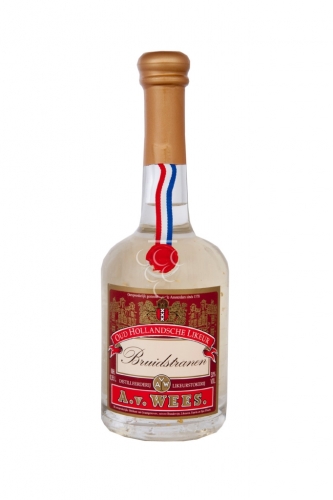
Bruidstranen

Bruidstranen

Curiously, the Dutch variety of this liquor is called ‘Bruidstranen’ (tears of the bride). It is hard to tell exactly since when this drink was produced and when the gold leaf was first added, but a search in the repository of the Digital Library of Dutch Literature (DBNL.nl) suggests the consumption of a drink called ‘Bruidstranen’ during or shortly after a wedding was a common tradition in the nineteenth century.[7] However, it appears that these ‘Bruidstranen’ were a sort of spiced, mulled wine or liquor; also known all over Europe as a festive drink called Hippocras.[8] The gold leaf may well be a twentieth-century addition.

This shows how the concept of ‘potable gold’ has changed profoundly in less than three hundred years; another reminder of how careful we should be when studying historical objects and concepts, as it is really easy to misinterpret them. Yet if you want serve your guests a festive cocktail and a good story this New Year’s Eve, mix a little layer of Gold Strike or Bruidstranen with cava, prosecco or another bubbly white wine in champagne glasses, and tell them about the potable gold of the alchemists and the tears of brides.

Happy new year!

P.S. For those who read Dutch: the Dutch medical heritage website http://www.medischerfgoed.nl is completely renewed. Check it out!


[1] Principe, Lawrence M. The Secrets of Alchemy. Chicago: University of Chicago Press, 2012, 113.

[2] Lindeboom, G.A., en Herman Boerhaave. Boerhaave’s Brieven aan Bassand. Haarlem: Erven F. Bohn, 1957, 8-12-1733, 223-6: “Ik heb er over gedacht, of zulk een oermaterie van goud niet het ware drinkbare goud zou kunnen zijn, zo gesierd door veel geprezen krachten? Dit is de enige reden van het verlangen dat te zien: want het zou gemakkelijk na te gaan zijn door het voorzichtig bij zieken aan te wenden.”

[3] For more about the eighteenth-century search for Gur, see Alfonso-Goldfarb, Ana Maria, en Marcia H.M. Ferraz. “Gur, Ghur, Guhr or Bur? The quest for a metalliferous prime matter in early modern times.” British Journal for the History of Science 46, nr. 1 (maart 2013): 23–37.

[6] Some people do still think a gold solution will improve their health, for them, gold colloid is sold online: http://www.crucible.org/gold_colloids.htm.

[7] Jan ter Gouw, De volksvermaken. Erven F. Bohn, Haarlem 1871, 538:  “Als ‘t paar was aangeteekend, waren ‘t alweêr de buren, die de bruidstranen kwamen opdrinken in den vorm van lekkeren ypocras. Aan de vrienden buiten de buurt werd de ypocras in vercierde flesschen t’huis gezonden. Oudtijds echter waren die bruidstranen slechts bier, en op den Eifel noemt men dit nog ‘heulbier’; maar of men ooit ergens jenever met stroop voor bruidstranen gedronken heeft, als ‘de Oude Tijd’ verhaalt, laat ik in ‘t midden…”

Two anatomy exhibitions: models and lessons

As of this week, there are two wonderful exhibitions on anatomy on in the Netherlands. The first is The anatomy lesson at the Gemeentemuseum in The Hague, the second is Amazing Models in Museum Boerhaave in Leiden. Leiden and The Hague are only 11 minutes apart by train, so if you’d want to you could visit both within half a day. For those who do not have a chance to visit the exhibitions, or need persuasion, here is a quick review.

The anatomy lesson

In this exhibition, all known seventeenth-century Dutch paintings of anatomy lessons have been brought together for the first time. They are presented together with contextual material such as historical anatomy handbooks, models, instruments and preparations, as well as contemporary art works that are inspired by anatomy and medicine, such as Damien Hirst’s Sometimes I Avoid People. Being the historian of medicine I am, I especially loved the fact that I could finally see all the seventeenth-century paintings together, although I have to admit the combination with contemporary art worked quite well.

Michiel Jansz van Mierevelt - Anatomy lesson of Dr. Willem van der Meer. Delft 1617. Oil on canvas.

Michiel Jansz van Mierevelt – Anatomy lesson of Dr. Willem van der Meer. Delft 1617. Oil on canvas.

Paintings of anatomical lessons were ordered by surgeons’ guilds in the seventeenth century primarily as status symbols. Although the set-up is pretty much identical in all of them – guild members dressed in the typical solemn black clothing with big white collars of the seventeenth-century Dutch Republic – some of them have really cool details. My personal favourite is the one painted by Michiel van Miereveldt, Anatomy lesson of Dr. W. van der Meer, Delft, 1617. In this painting, small details stress the harsh reality of the anatomy lesson: around the opened body, we see a candle, burning incense, and guild members holding twigs of herbs to counter the undoubtedly putrid smell of the decaying corpse.

Amazing models

This detail also brings home one of the great benefits of the exhibits in the Amazing models exhibition in Museum Boerhaave: they allowed people to study human anatomy without having to deal with the smell of death. In this amazing exhibition that travels through Europe, late eighteenth- and nineteenth-century wax models from collections in Bologna and Vienna are combined with Museum Boerhaave’s collection of nineteenth-century papier-mâché models from the Auzoux workshop. The sharp contrast between the elegant anatomical Venus made from wax and the raw realism of the wax models of pathologies makes it hard to believe that such vastly different anatomical models were produced within such a short timeframe.

Clemente Susini and workshop, Italian, 1754–1805, Anatomical Venus, 1782 Photo by Saulo Bambi, Museo di Storia Naturale "La Specola" Florence, Italy

Clemente Susini and workshop, Italian, 1754–1805, Anatomical Venus, 1782
Photo by Saulo Bambi, Museo di Storia Naturale “La Specola” Florence, Italy

However, the reception of some of the Venuses is illustrative here. The first Venuses were ordered by  grand duke Pietro Leopold of Tuscany in the 1770s for his museum, La Specola in Florence. In the 1790s, his brother Joseph ordered anatomical wax models, including some Venuses, for the Josephinum in Vienna. However, the Jospehinum had been established in 1785 as medical academy for the military, so this collection was not primarily meant for the education of citizens, but to train military surgeons and physicians. As Anna Maerker has vividly described, the iconography of the Venuses backfired in this context; the envisioned users of the models condemned them as luxury toys, unsuitable for medical training.[1] The Auzoux models, many of them not made much later, are of a much more pragmatic nature: cheaper and easier to handle, and thus immensely popular with educational institutions throughout the nineteenth century.

All in all, two exhibitions worth visiting!


[1] Maerker, Anna. Model Experts.  Wax anatomies and Enlightenment in Florence and Vienna, 1775-1815. Manchester and New York: Manchester University Press, 2011.

The jamu women: herbal medicine in colonial Indonesia

The jamu women: herbal medicine in colonial Indonesia

A couple of weeks ago, I wrote about my upcoming trip to Indonesia. Back in the Netherlands, I am cherishing the new memories of everything we saw and did. Throughout Indonesia, we encountered many reminders of the shared Dutch-Indonesian colonial past. Predictably, some were rather embarrassing, such as the fact that as we were travelling, the Dutch government finally apologized half-heartedly for the atrocities committed by captain Westerling.

Caricature wajang puppets at the National Wajang Museum, Jakarta, Indonesia

Caricature wajang puppets at the National Wajang Museum, Jakarta, Indonesia

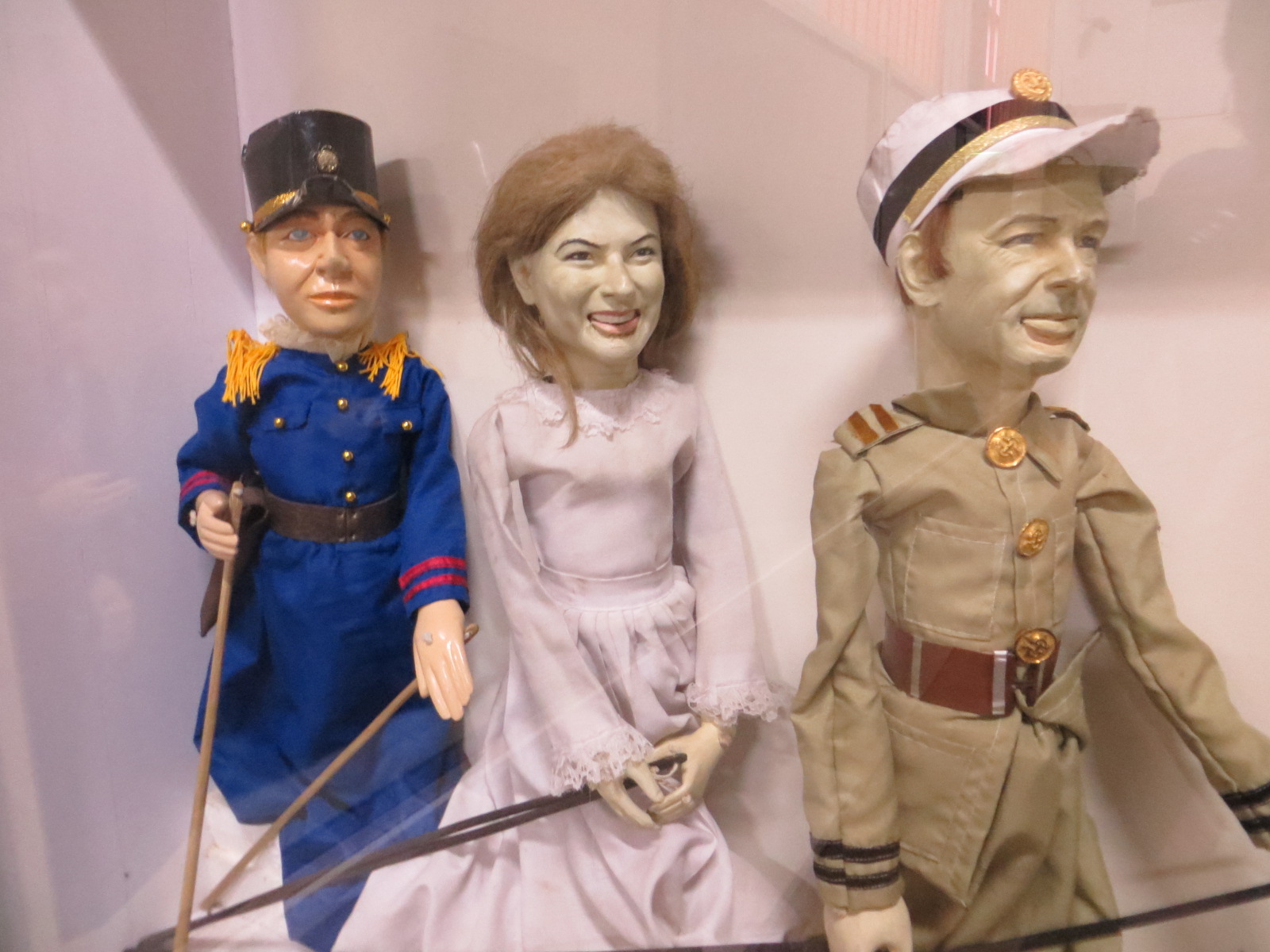
Others were endearing or even funny, such as the caricatural wajang puppets of J.P. Coen (1587-1629), founder of Batavia, in the National Wajang Museum. Understandably, in many cities little is left of Dutch colonial architecture, and finding traces of the medicine and chemistry of the eighteenth century would have required archival expeditions, something I had promised my better half to refrain from during this holiday. However, many other, more recent souvenirs of a shared history of medicine were easily found. The most enjoyable was probably a visit to the jamu factory of Nyonya Meneer in Semarang, a big harbour city in the north-east of Java, the city where my mother-in-law was born.

Portrait of Nyonya Meneer in the factory museum, Semarang, Indonesia.

Portrait of Nyonya Meneer in the factory museum, Semarang, Indonesia.

About fifty years earlier, Nyonya Meneer (1895-1978) was born in East Java. Here actual name was Lauw Ping Nio, but she probably was required to have an Indonesian name too as she was a member of the ethnic Chinese minority in Indonesia. ‘Meneer’ (which means ‘mister’ in Dutch) was likely a degeneration of the Indonesian word ‘menir,’ broken rice, which her mother was said to have craved during her pregnancy. When Nyonya’s husband suffered from severe intestinal complaints in the 1920s, Nyonya Meneer started to make him jamu medicines, traditional Indonesian herbal cures. Eventually, she set up a business to sell them to others too, and today Nyonya Meneer jamu products are sold throughout Asia.[1]

Advertisement for breast-firming herbs, probably 1940s.

Advertisements in Dutch and Indonesian for breast-firming herbs, probably 1940s.

In the small museum at the factory site, you can see a nice selection of historical documents, photographs, some of Nyonya Meneer’s personal belongings, an explanation of the production process, and objects such as raw ingredients, storage containers, product packaging, and historical production tools. In the museum, it quickly becomes clear how intertwined the lives of the Indonesians and the Dutch were in the colonial era. Nyonya Meneer taught herself the basics of pharmaceutics from a Dutch handbook, and many of the advertisements from before 1950 are in Dutch, as jamu was popular with both the Dutch and the Indonesians. This also shows from the fact that a 1907 Dutch handbook on the curative powers of Indonesian plants was so popular that it was updated and reprinted at least ten times in fifty years.[2] As late as the 1980s an Indonesian translation was sold.[3]

What is interesting to see is that women, both Indonesian and Dutch, dominated the domain of jamu or traditional herbal medicine in twentieth-century Dutch Indonesia and that it was a shared domain with Semerang as its centre. Nyonya Meneer founded an emporium and ran her company almost single-handedly for about half a century, and ‘Kloppenburg,’ the handbook written by Mrs.’s  Kloppenburg-Versteegh (1862-1948) and originally published in Semarang, was a household name for Dutch women in Indonesia.

The most obvious explanation for this would be that herbal medicine was traditionally the domain of women, and that women would have to deal with ill family members and manage the household budget, which may have created a market for the relatively easily obtainable jamu products. However, this is just speculation, and my visit to the Nyonya Meneer factory raised many more questions that are worth answering, such as whether Mrs. Meneer and Mrs. Kloppenburg-Versteegh ever met, how Semarang came to be the centre of Jamu production, et cetera. Who knows, maybe I or someone else will one day have a chance to investigate further.

The blogging historian

About thirteen months ago, I started this blog to keep my friends, colleagues and family updated about the work I was doing. As I have been blogging for over a year now and as I am going to discuss history blogs on a panel this week, it is time to reflect on how it all started, what it has brought me, and what the future looks like. I was inspired to start a blog of my own by Lindsey Fitzharris’ brilliant blog The Chirurgeon’s Apprentice, although I by no means intended to copy what she is doing, nor did I expect to generate the same kind of success. Lindsey has, amongst other things, gone on to appear in a variety of media, writing for the Huffington Post and crowd funding her own television series. However amazing all this is, it just would not be right for me (the camera doesn’t love me, for starters).

However, blogs are a useful medium for a historian whatever your ambitions are. As a reader of history blogs, I can say they give me a quick and enjoyable insight in what colleagues are working on, enabling me to contact them easily if I am working on something similar, or have some information that might be useful to them. Some of my favourites are:

If you look at these blogs you may be surprised to find that they vary wildly: some are personal projects, some are collectives or institutional blogs, some appear weekly, others incidentally. There are blogs that feature journal article-length pieces, while there are also blogs (like my own) that rely on shorter pieces. One is not necessarily better than the other, although it is good to realise that a certain format will be more likely to draw a particular audience.

For me, writing my blog is valuable in itself, as it allows me to share finds that do not fit entirely in a ‘real’ publication, as well as to share work in progress. Moreover, blogging helps me to reflect on my own work and to communicate it to a variety of people. My research is funded with public money, so I feel obliged to show the public what I am doing with it. Obviously I could simply refer to my print publications on my faculty page, but I want to share my work more frequently, more directly, and with a broader audience. In comparison to others, mine is a small, rather unpretentious blog, but still people from seventy countries have viewed it over 4,000 times in the past year.

Apart from the fact that it is nice to know that my parents and someone in Japan read my blog, it has also brought me into contact with people whom I otherwise never would have met, like Tamara Varney. My blog also got me invited as a guest blogger with The Recipes Project and I regularly receive emails from other academics, as well as from journalists and people who are simply interested in one of the topics I write about who ask questions, have helpful suggestions, or who want to share some of their work with me. Finally, the blog serves as a business card: often people look one another up on the internet before meeting at a conference, and a blog gives a quick impression of the work you’re doing.

I know I am probably not using the full potential of my blog yet; I could improve on tagging and categorizing, and might be able to use my posts more strategically. Yet the foundations are there, and as James M. Banner Jr. points out in his book Being a Historian. An introduction to the professional world of history:

“Fortunately, there is some evidence that the readership of serious history blogs, infinite in prospect, is, while small in comparison to those on popular subjects, an attentive one spanning the world. Whether this audience can help make history blogging an accepted, respectable means of communicating historical knowledge among both amateurs and professionals remains to be seen. But no one concerned with the future of historical communication can afford to ignore this new use of a young medium.”[1]


[1] James M. Banner Jr. Being a Historian. An introduction to the professional world of history. Cambridge, Cambridge University Press, 2012. p.92.

Traces of Dutch colonialism: reflections before a holiday

Next week, I am going on holiday to Indonesia – a long-cherished dream coming true. Of course I am excited about the prospect of exotic markets, vibrant cities, meeting new people, stunning landscapes and drinking cocktails on a palm-rimmed beach. But I am also very curious about what remains to be seen of the Dutch colonial period, as I have read that most of what remains in terms of colonial architecture and archives is ‘crumbling.’ The upcoming trip reminded me of a number of publications on Dutch trade and scientific activities in the colonial era in what was called ‘Oost-Indië’ (East India) or ‘de gordel van smaragd’ (the emerald girdle).

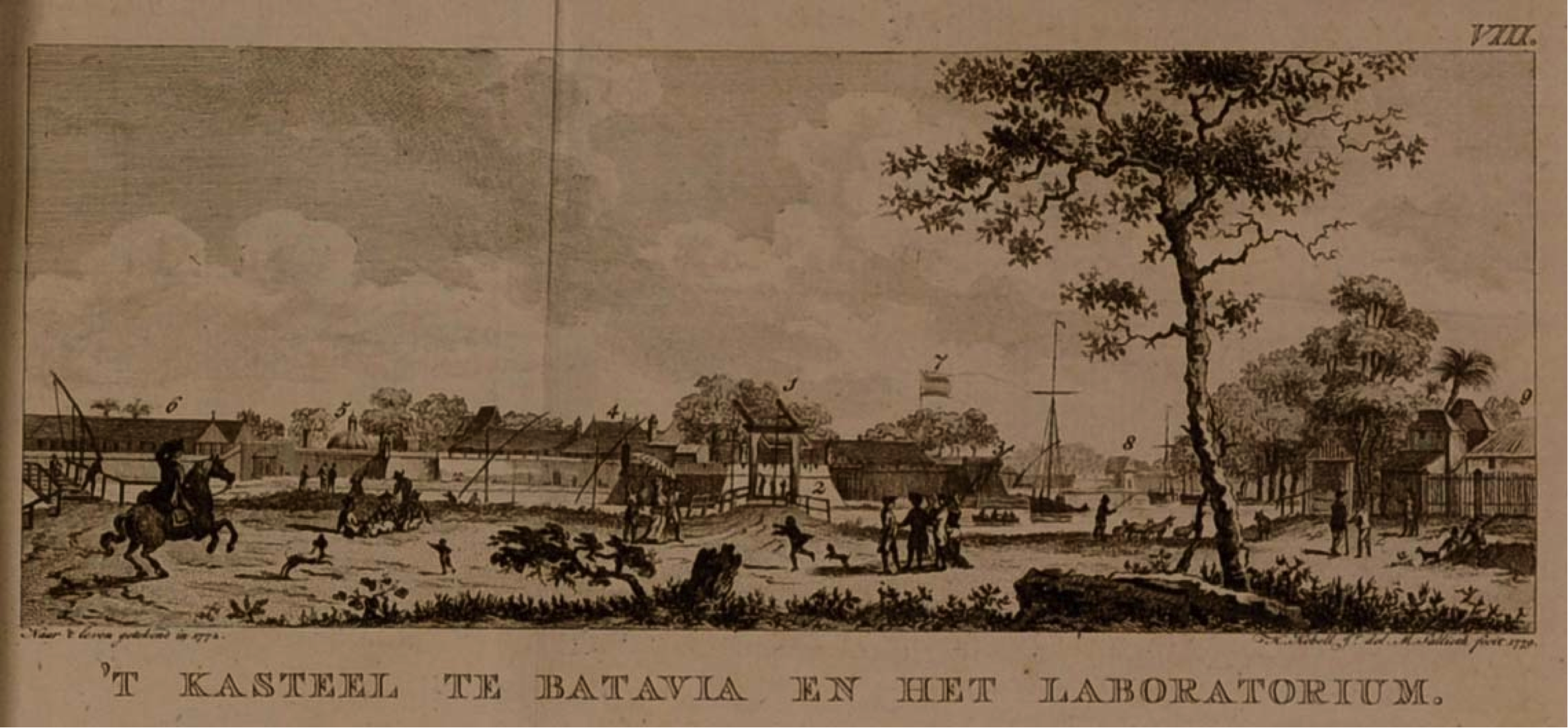
Between 1602 and 1795, the Verenigde Oostindische Compagnie (United East India Company, VOC) imported great amounts of a variety of goods from what is now Indonesia, such as tea, coffee, ginger, cinnamon, nutmeg, and tin. Many of these goods had some kind of medicinal purpose. Nutmeg for example, was not just appreciated as a spice, but also for its hallucinogenic properties, which were used to keep slaves calm during the long, arduous sea journeys. Although excessive use could cause deliria and even death, nutmeg was a sought-after commodity among medical men and even appeared in preparations of human anatomy sometimes.[1] Yet the Dutch stationed in Batavia (now Jakarta) also wanted to have traditional European cures at hand, and many pills, potions, salves, and herbal plasters had to be made afresh as they could not be kept for long.

"The Castle and the Laboratory at Batavia" From: Batavia de hoofdstad van Neêrlands O. Indien, Amsterdam, 1782. Courtesy of the Nationaal Archief.

“The Castle and the Laboratory at Batavia” From: Batavia de
hoofdstad van
Neêrlands O. Indien, Amsterdam, 1782. Courtesy of the Nationaal Archief.

In a fascinating article on VOC laboratories that I read in a Dutch popular history magazine last year, Jeroen Bos shows that for these purposes, the VOC maintained at least two medical laboratories in Batavia. One was an independent ‘medicinal shop,’ a sort of apothecary shop; the other was the city hospital laboratory. A third laboratory was linked to the artillery and only produced gunpowder. Unlike the contemporary chemical laboratories at the universities of Utrecht and Leiden , the laboratories in Batavia were not aimed at chemistry research, but primarily at the production of drugs and quality control of the products the VOC acquired in the region, such as cinnamon and quicksilver. Unfortunately, hardly any detailed information about the lay out of the laboratories and exactly what was made and tested in them remains.

Andreas Weber's dissertation

Andreas Weber’s dissertation

The VOC ceased to exist on December 31st, 1799, as it had run into financial trouble. Yet the Dutch would continue to occupy parts of Indonesia until it became independent in 1945. (Actually, the Dutch occupied parts of Indonesia even longer, until 1949 – a particular painful and unflattering period in our history) Between 1800 and 1945, East India continued to be a source of fascination for researchers working for the Dutch government. German Caspar G.C. Reinwardt (1773-1854) for example, spend about seven years collecting data on the administration, nature and economy of Java, initiated reforms of its public health services and the education system, and established a botanical garden at Buitenzorg, just outside Batavia, where rare and potentially economically interesting plants were cultivated. As my colleague Andreas Weber has vividly described in his book on Reinwardt, the king obliged him to collect rare specimens for the Dutch Cabinet of Natural History on his field trips, and Reinwardt also employed other to amass natural history collections.[2]

Another colleague, Fenneke Sysling, in her 2013 thesis on physical anthropology in the Dutch East Indies in the nineteenth and twentieth centuries, argues that ideas about race were both made and broken in the colonies.[3] Even today, some Dutch museums have uncomfortably large collections of skulls, skeletons, measurements and photographs of indigenous people, collected to answer the great anthropological questions of the time. How many different races were there in the archipelago, how were they divided over the islands? Questions that could never really be answered of course, but nonetheless the research was done for decades, and could only be done because of the often-violent Dutch colonial presence in the archipelago.

With this knowledge, I will walk around the remains of Batavia. I am not exactly proud of Dutch colonial history, but I am grateful that my colleagues and I have the opportunity to research it. Indonesia has had a huge influence on Dutch trade and science over the centuries (not to mention on Dutch society, but that is another story), one that we should not forget, even if the physical remains of Dutch colonialism slowly disappear from the country.


[1] Also see Marieke M.A. Hendriksen, Aesthesis in Anatomy, PhD Thesis, Leiden University 2012, p. 154-6.

[2] Andreas Weber, Hybrid Ambitions. Science, Governance, and Empire in the Career of Caspar G.C. Reinwardt (1773-1845), Leiden: Leiden University Press, 2012.

[3] Fenneke Sysling, The archipelago of difference. Physical anthropology in the Netherlands East Indies, ca. 1890-1960’, PhD thesis, Amsterdam: Vrije Universiteit, 2013.