The blogging historian

About thirteen months ago, I started this blog to keep my friends, colleagues and family updated about the work I was doing. As I have been blogging for over a year now and as I am going to discuss history blogs on a panel this week, it is time to reflect on how it all started, what it has brought me, and what the future looks like. I was inspired to start a blog of my own by Lindsey Fitzharris’ brilliant blog The Chirurgeon’s Apprentice, although I by no means intended to copy what she is doing, nor did I expect to generate the same kind of success. Lindsey has, amongst other things, gone on to appear in a variety of media, writing for the Huffington Post and crowd funding her own television series. However amazing all this is, it just would not be right for me (the camera doesn’t love me, for starters).

However, blogs are a useful medium for a historian whatever your ambitions are. As a reader of history blogs, I can say they give me a quick and enjoyable insight in what colleagues are working on, enabling me to contact them easily if I am working on something similar, or have some information that might be useful to them. Some of my favourites are:

If you look at these blogs you may be surprised to find that they vary wildly: some are personal projects, some are collectives or institutional blogs, some appear weekly, others incidentally. There are blogs that feature journal article-length pieces, while there are also blogs (like my own) that rely on shorter pieces. One is not necessarily better than the other, although it is good to realise that a certain format will be more likely to draw a particular audience.

For me, writing my blog is valuable in itself, as it allows me to share finds that do not fit entirely in a ‘real’ publication, as well as to share work in progress. Moreover, blogging helps me to reflect on my own work and to communicate it to a variety of people. My research is funded with public money, so I feel obliged to show the public what I am doing with it. Obviously I could simply refer to my print publications on my faculty page, but I want to share my work more frequently, more directly, and with a broader audience. In comparison to others, mine is a small, rather unpretentious blog, but still people from seventy countries have viewed it over 4,000 times in the past year.

Apart from the fact that it is nice to know that my parents and someone in Japan read my blog, it has also brought me into contact with people whom I otherwise never would have met, like Tamara Varney. My blog also got me invited as a guest blogger with The Recipes Project and I regularly receive emails from other academics, as well as from journalists and people who are simply interested in one of the topics I write about who ask questions, have helpful suggestions, or who want to share some of their work with me. Finally, the blog serves as a business card: often people look one another up on the internet before meeting at a conference, and a blog gives a quick impression of the work you’re doing.

I know I am probably not using the full potential of my blog yet; I could improve on tagging and categorizing, and might be able to use my posts more strategically. Yet the foundations are there, and as James M. Banner Jr. points out in his book Being a Historian. An introduction to the professional world of history:

“Fortunately, there is some evidence that the readership of serious history blogs, infinite in prospect, is, while small in comparison to those on popular subjects, an attentive one spanning the world. Whether this audience can help make history blogging an accepted, respectable means of communicating historical knowledge among both amateurs and professionals remains to be seen. But no one concerned with the future of historical communication can afford to ignore this new use of a young medium.”[1]


[1] James M. Banner Jr. Being a Historian. An introduction to the professional world of history. Cambridge, Cambridge University Press, 2012. p.92.
Traces of Dutch colonialism: reflections before a holiday

Next week, I am going on holiday to Indonesia – a long-cherished dream coming true. Of course I am excited about the prospect of exotic markets, vibrant cities, meeting new people, stunning landscapes and drinking cocktails on a palm-rimmed beach. But I am also very curious about what remains to be seen of the Dutch colonial period, as I have read that most of what remains in terms of colonial architecture and archives is ‘crumbling.’ The upcoming trip reminded me of a number of publications on Dutch trade and scientific activities in the colonial era in what was called ‘Oost-Indië’ (East India) or ‘de gordel van smaragd’ (the emerald girdle).

Between 1602 and 1795, the Verenigde Oostindische Compagnie (United East India Company, VOC) imported great amounts of a variety of goods from what is now Indonesia, such as tea, coffee, ginger, cinnamon, nutmeg, and tin. Many of these goods had some kind of medicinal purpose. Nutmeg for example, was not just appreciated as a spice, but also for its hallucinogenic properties, which were used to keep slaves calm during the long, arduous sea journeys. Although excessive use could cause deliria and even death, nutmeg was a sought-after commodity among medical men and even appeared in preparations of human anatomy sometimes.[1] Yet the Dutch stationed in Batavia (now Jakarta) also wanted to have traditional European cures at hand, and many pills, potions, salves, and herbal plasters had to be made afresh as they could not be kept for long.

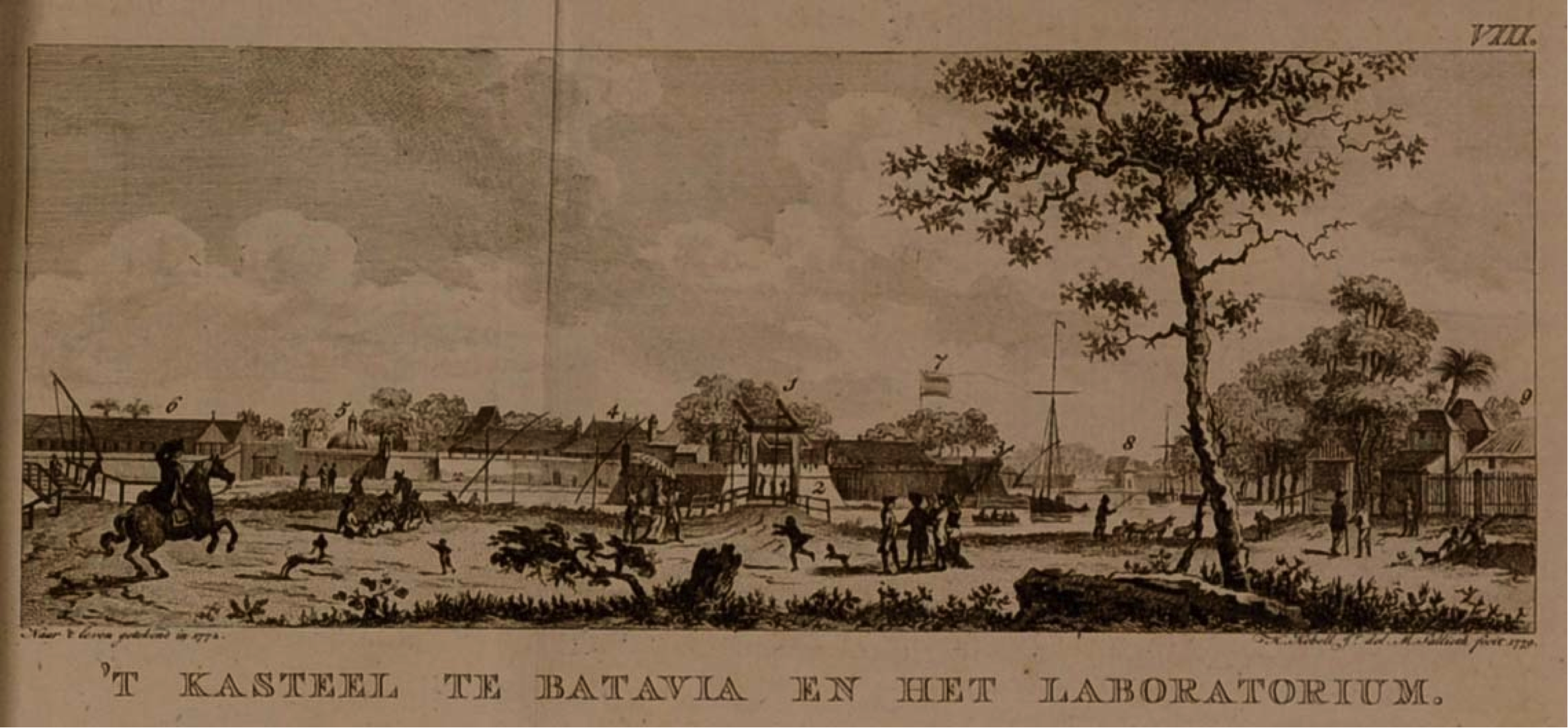
"The Castle and the Laboratory at Batavia" From: Batavia de hoofdstad van Neêrlands O. Indien, Amsterdam, 1782. Courtesy of the Nationaal Archief.

“The Castle and the Laboratory at Batavia” From: Batavia de
hoofdstad van
Neêrlands O. Indien, Amsterdam, 1782. Courtesy of the Nationaal Archief.

In a fascinating article on VOC laboratories that I read in a Dutch popular history magazine last year, Jeroen Bos shows that for these purposes, the VOC maintained at least two medical laboratories in Batavia. One was an independent ‘medicinal shop,’ a sort of apothecary shop; the other was the city hospital laboratory. A third laboratory was linked to the artillery and only produced gunpowder. Unlike the contemporary chemical laboratories at the universities of Utrecht and Leiden , the laboratories in Batavia were not aimed at chemistry research, but primarily at the production of drugs and quality control of the products the VOC acquired in the region, such as cinnamon and quicksilver. Unfortunately, hardly any detailed information about the lay out of the laboratories and exactly what was made and tested in them remains.

Andreas Weber's dissertation

Andreas Weber’s dissertation

The VOC ceased to exist on December 31st, 1799, as it had run into financial trouble. Yet the Dutch would continue to occupy parts of Indonesia until it became independent in 1945. (Actually, the Dutch occupied parts of Indonesia even longer, until 1949 – a particular painful and unflattering period in our history) Between 1800 and 1945, East India continued to be a source of fascination for researchers working for the Dutch government. German Caspar G.C. Reinwardt (1773-1854) for example, spend about seven years collecting data on the administration, nature and economy of Java, initiated reforms of its public health services and the education system, and established a botanical garden at Buitenzorg, just outside Batavia, where rare and potentially economically interesting plants were cultivated. As my colleague Andreas Weber has vividly described in his book on Reinwardt, the king obliged him to collect rare specimens for the Dutch Cabinet of Natural History on his field trips, and Reinwardt also employed other to amass natural history collections.[2]

Another colleague, Fenneke Sysling, in her 2013 thesis on physical anthropology in the Dutch East Indies in the nineteenth and twentieth centuries, argues that ideas about race were both made and broken in the colonies.[3] Even today, some Dutch museums have uncomfortably large collections of skulls, skeletons, measurements and photographs of indigenous people, collected to answer the great anthropological questions of the time. How many different races were there in the archipelago, how were they divided over the islands? Questions that could never really be answered of course, but nonetheless the research was done for decades, and could only be done because of the often-violent Dutch colonial presence in the archipelago.

With this knowledge, I will walk around the remains of Batavia. I am not exactly proud of Dutch colonial history, but I am grateful that my colleagues and I have the opportunity to research it. Indonesia has had a huge influence on Dutch trade and science over the centuries (not to mention on Dutch society, but that is another story), one that we should not forget, even if the physical remains of Dutch colonialism slowly disappear from the country.


[1] Also see Marieke M.A. Hendriksen, Aesthesis in Anatomy, PhD Thesis, Leiden University 2012, p. 154-6.

[2] Andreas Weber, Hybrid Ambitions. Science, Governance, and Empire in the Career of Caspar G.C. Reinwardt (1773-1845), Leiden: Leiden University Press, 2012.

[3] Fenneke Sysling, The archipelago of difference. Physical anthropology in the Netherlands East Indies, ca. 1890-1960’, PhD thesis, Amsterdam: Vrije Universiteit, 2013.

Between stories and history: the mirror of contemporary art

This week, when I was researching some sources on late seventeenth-century iatrochemistry, I ran across a reference to the work of Philip Verheyen (1648-1710), a farmhand-turned-anatomist. I had never heard of him before, but thought his work might be interesting for me, so I did what every person, including an academic, does these days: I googled him. And clicked the first link: a Wikipedia page. A bit surprised that a quite detailed Wikipedia page in English, complete with painted portrait was dedicated to a relatively obscure seventeenth-century Flemish anatomist, I started reading. It all seemed genuine enough, with references to the work of known Dutch historians of medicine such as Lindeboom. Until I read that Verheyen had dissected his own leg and suffered phantom pains after it was amputated, and that this

‘…prompted him to take up a career in anatomy in order to probe and understand this phenomenon and also write the deeply personal series of notes (1700-1710) that may be translated either as “Notes on My Amputated Leg,” or “Letters to My Amputated Leg,” the former seeming more probable, while the latter is more in keeping with the tone of the notes.’

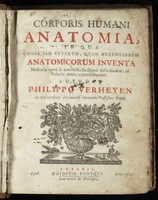
Verheyens 1693 ‘Corporis Humani Anatomia'was reprinted 21 times and translated in several languages.

Verheyens 1693 ‘Corporis Humani Anatomia’ was reprinted 21 times and translated in several languages.

I bet you clicked the link to the Letters, didn’t you? I did! And it’s a stub. Some people may now think ‘well, duh, of course, you shouldn’t just believe everything that’s on Wikipedia.’ Obviously you shouldn’t (as I keep stressing when I’m lecturing too), but by now I have read so many weird and wonderful things about early modern medicine and chemistry that a small part of me still wondered whether there was some truth to this story. So I looked Verheyen up in Picarta (the Dutch national library catalogue, a sort of Worldcat). He did indeed exist, wrote quite some interesting things on anatomy, but no letters to his leg. The other references I could check online do mention the amputated leg, but no dissection or letters.

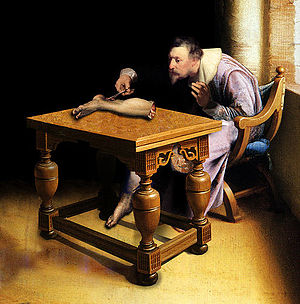
Then I continued reading the Wikipedia page and noticed that the author says that Verheyen studied at the Leids Universitair Medisch Centrum – indeed an existing institution, but a profoundly twentieth-century institution. A bit annoyed with this nonsense now, I scrolled back up and had a closer look at the ‘painting’ of Verheyen dissecting his own leg. Now I immediately saw it was not a painting at all, but a digitally composed image – I actually recognized ‘Verheyen’ as one of the onlookers in Tulp’s Anatomical lesson. When I magnified the image, I noticed the bare ‘stump’ of the leg under the table, and couldn’t help laughing. Someone had put a lot of thought into this!

Rembrandt, The Anatomy Lesson of Dr. Nicolaes Tulp , 1632. Oil on canvas. Mauritshuis, The Hague.

Rembrandt, The Anatomy Lesson of Dr. Nicolaes Tulp , 1632. Oil on canvas. Mauritshuis, The Hague.

Philip Verheyen Dissecting His Amputated Leg. According to Wikipedia: "Anonymous. From the collection of Pieter Deheijde."

Philip Verheyen Dissecting His Amputated Leg. According to Wikipedia: “Anonymous. From the collection of Pieter Deheijde.”

Back to Google, I found that the sixth hit was a link to a project of a New York-based artist, Sreshta Rit Premnath. It turns out that the ‘painting’ and the entire Wikipedia page on Verheyen are part of an art project. In a response to a message written by someone who did not notice the inconsistencies, Premnath readily admits that the Wiki is largely fictitious, and the portrait a digital creation. Yet it is not some silly joke; Premnath raises some serious questions with this project. As he puts it himself:

‘Do we not all perceive the world through images that are given to us through books and media; and through the socio-political contexts in which we are brought up? The painting “Philip Verheyen Dissecting His Own Amputated Leg” does not actually exist. It is a composite image I have created in order to explore this fragility of truth and authenticity.’

I think the way Premnath has chosen to raise these questions is quite brilliant, as even people who are generally considered to be relatively smart and critical-minded (historians like myself, the author of the message Premnath is responding to – who is apparently a medical doctor) are initially willing to believe that Verheyen really dissected his own leg and wrote letters to it. This may seem silly, but on the other hand open-mindedness is also required to be a good academic. This balancing of open-mindedness and critical thinking also reminded me of another exploration of the fragility of truth and authenticity I really love: David Wilson’s Museum of Jurassic  Technology in Los Angeles. This museum leaves visitors wondering which of its exhibits are real – yet they are all wonderful. I had the pleasure of visiting the museum in 2010, but if you can’t, do read Lawrence Weschler’s Mr. Wilson’s Cabinet of Wonder. Pronged Ants, Horned Humans, Mice on Toast, and Other Marvels of Jurassic Technology.

Although I admit I was a little annoyed when I initially discovered I was being ‘fooled’ with the Verheyen Wiki, I think projects like Premnath’s and Wilson’s are more than necessary to keep everyone, including, or maybe especially us academics, sharp and critical about what we understand as true and authentic and factual. Contemporary art can hold up a mirror, and show us how we often construct stories unthinkingly – and that it is the task of the historian to undo these constructions and think them through and reconstruct them into histories. Only to humbly realize that those histories are also stories, of course.

Location, location: the influence of the local climate on health

Last week (and much of the weeks before), as most of you in the northwest of Europe may have noted, it was hot. While I was in the UK and spent most of my time in thoroughly air-conditioned libraries, it did not bother me much. But then I came back home, and for all kinds of practical reasons it was more convenient to work from my decidedly un-air-conditioned, early twentieth-century house than to make the four-hour round trip commute to my office at the University of Groningen, or to hide in other libraries.

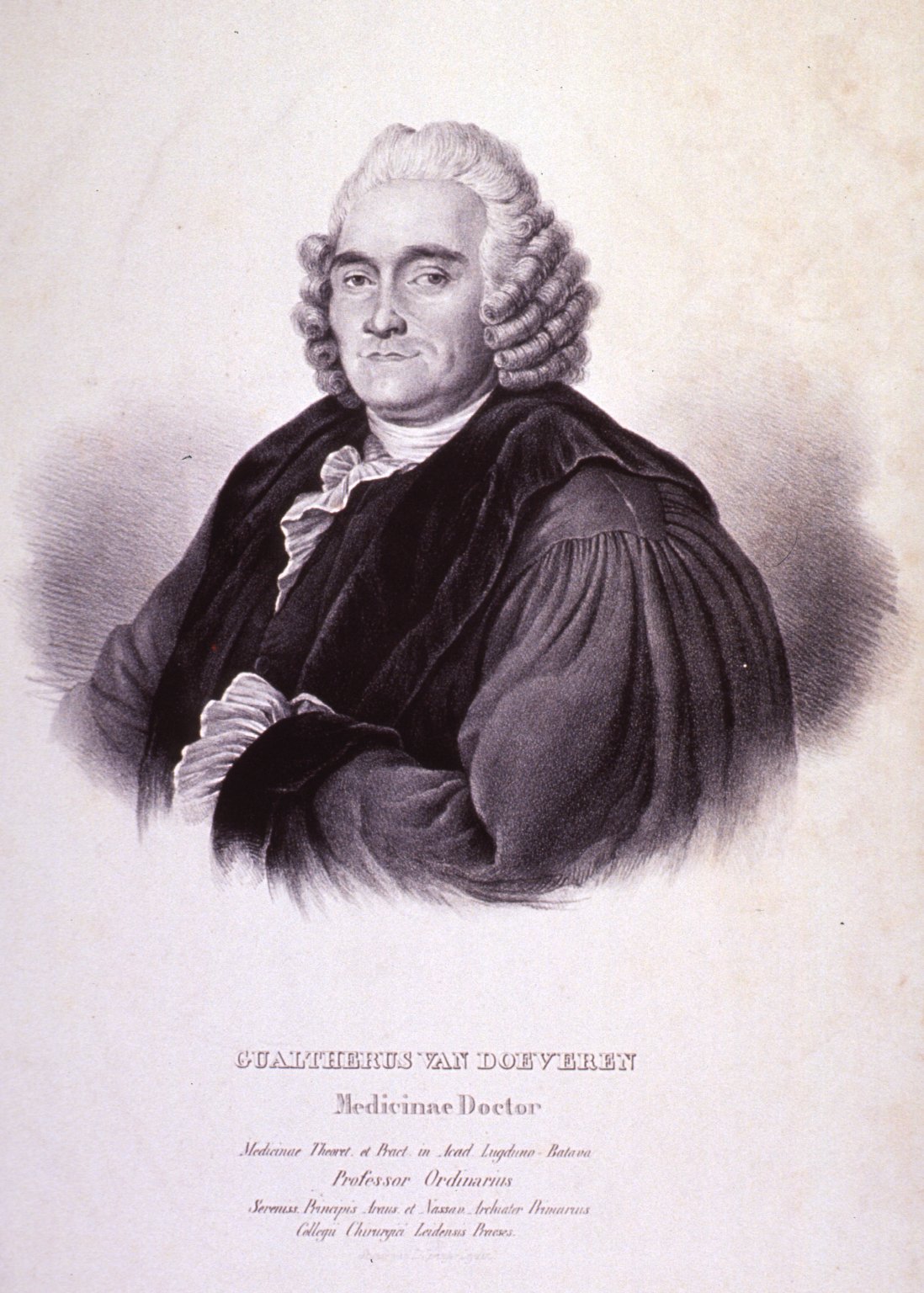
Professor Wouter van Doeveren, 1730-1783

Professor Wouter van Doeveren, 1730-1783

So there I was. I was supposed to be writing a paper, but seemed to suffer from something I’ll unscientifically define as ‘cooked brain.’ Nothing sensible seemed to come out of my hands or mind. Maybe I should have gone to Groningen after all, as I suddenly remembered an oration by an eighteenth-century Dutch professor of anatomy who taught at Groningen and later at Leiden. Wouter van Doeveren (1730-1783) in 1770 gave an oration on the beneficial climate of the city of Groningen – it was his farewell to the city where he had worked for sixteen years.

Today, Dutch people still joke about the north of the Netherlands being colder than the south or even the middle, which seems rather ridiculous as the distances are tiny, the landscape is rather unvaried, and the entire country has a mild marine climate (Cfb in the Köppen-system). However, there is some truth to those quips: on the website of the Royal Dutch Meteorological Institute (KNMI), there are maps of the long-term average temperatures in the Netherlands, and these do show that on average, the west is about a degree Celsius or so warmer than the middle of the country, and the east is even a bit colder in winter, whereas in summer it is the other way around.  So although it is more of a west-east divide than the popular idea of a north-south divide suggests, there are climatological differences in this tiny country.

View of the city of Groningen from the side of the Aa gate (the Aa is a river), 1750-1850.  The subscript reads: "This is Groningen, jewel of the  history journals because of its heroics. Famous for its diligence and rich growth, it is called the country's crown jewel." Courtesy of Leiden University Library.

View of the city of Groningen from the side of the Aa gate (the Aa is a river), 1750-1850. The subscript reads: “This is Groningen, jewel of the history journals because of its heroics. Famous for its diligence and rich growth, it is called the country’s crown jewel.” Courtesy of Leiden University Library.

Van Doeveren had no KNMI maps, yet he did know that ‘the moderate marine climate of Groningen is beneficial for the body.’ The rather cool climate, according to his lecture, was good for people, as the cold enhances the solidity and resilience of the fibres of the body, strengthening it and thus multiplying the force of life.[1]  As he readily admitted, his ideas were based on the work of Hippocrates, who argued that studying the climate in various regions and cities and its influence on different bodies could provide information on the benefits of certain climates to human health.[2] However, Van Doeveren disappointedly noted that although the climate and the natural resources of Groningen made it a rather healthy place, the population still wrought havoc on itself by choosing a diet of ‘corned or smoked meat and fish, pickled vegetables, old and sharp cheese,’ and unhealthy drinks like ‘acerb, sharp wines, strong spirits, and watery extracts.’[3]

With Van Doeveren’s wise words in mind, I made a fresh salad and a jug of not-too-watery lemonade, put my fan on my desk, and got on with it. Next time we have a heat wave, I’ll take the salad and the lemonade to Groningen!


[1] Doeveren, Wouter van. Sermo Academicus De Sanitatis Groninganorum Praesidiis, Ex Urbis Naturali Historia Derivandis / Dictus Cum Iterum Fasces Academicos Poneret. Groningae 1770, p.9-10.

[2] Hippocrates, De Aeribus, Aquis et Locis

[3] Doeveren, Wouter van, 1770, p. 34.

Keeping a blog has many benefits, and one of them is the fact that you can share your research with people from around the world. Occasionally, this means an academic colleague from a field quite different to my own gets in touch, because they have read something on my blog that is relevant to them. It’s really exciting when that happens, because it broadens both our horizons. So you can imagine I was happy to receive an email from bioarcheologist Dr Tamara Varney last spring.

Dr Varney is the PI on a project that looks at toxic trace elements, especially lead, in colonial populations, analysing human bone from colonial cemeteries. She recently excavated the site of a Royal Naval Hospital in Antigua, and found that the bones of one individual contained low lead levels, but very high mercury levels.

Antigua is a Caribbean island. The graveyard of the Royal Naval Hospital is near the historical site of Nelson's Dockyard, in the south-east of the island.

Antigua is a Caribbean island. The graveyard of the Royal Naval Hospital is near the historical site of Nelson’s Dockyard, in the south-east of the island.

Dr Varney’s team includes another bioarcheologist, Dr Treena Swanston (University of Saskatchewan), a bone tissue-imaging specialist Dr David Cooper (University of Saskatchewan), and a chemist/synchrotron beamline scientist, Dr Ian Coulthard (Canadian Light Source). (I actually had to look up that last one too) However impressive this team is, they wanted to connect with historians with a similar interest to collaborate. Was I interested? Of course!

Ever since that first email, we have been exchanging information from our respective expertise on a regular basis, and we hope to publish something together at some point in the future. Right here, I’d like to give a taste of what a historian of medicine can do with the data of a bioarcheologist, as I feel many academics are still a bit reticent about cooperating with someone from an entirely different field.

My initial thought was that remains with high mercury levels may have come either from a patient treated with large amounts of mercury-based drugs, as was common at the time in venereal disease and many other ailments, or from a professional who worked with mercury, such as a doctor. Yet ‘a doctor’ is so general it is obviously of little use to anyone, so when I was in London to give a talk at the National Maritime Museum in April, I seized the opportunity to check some papers on the Royal Naval Hospital in Antigua to see if I could find some information on the use of mercurial drugs there.

Nelson's Dockyard, Antigua, today.

Nelson’s Dockyard, Antigua, today.

The papers kept at the NMM were property of Sir John Borlase Warren (2 September 1753 – 27 February 1822), commander in chief of the North America Station of the Royal Navy from 1807-1810 and in 1812-1814.[i] The station was based at Halifax Naval Yard in Novia Scotia. This apparently put him in charge of the appointments of personal at, amongst others, the Antigua Naval Hospital. During the 18th century, Antigua was used as the headquarters of the British Royal Navy Caribbean fleet, so it made sense to have a Royal Naval Hospital there.

From the correspondence at the NMM, it appears that James Veitch M.D. was surgeon of the Antigua Naval Hospital, and that he was in charge of the hospital and the distribution of drugs among the patients. Veitch also published some work on medicine, most notably A letter to the Commissioners for Transports, and Sick and Wounded Seamen, on the non-contagious nature of the yellow fever.[ii]  In it, he writes the following:

I decidedly agree with Mr. Pym, as to the rapidity of convalescence and restoration to

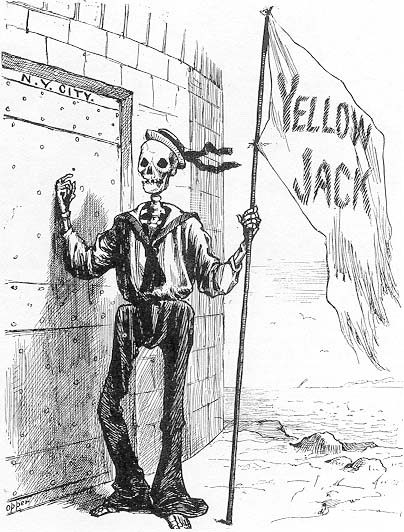
Yellow fever was a big problem in harbours in the eighteenth and nineteenth century. Here 'Yellow Jack' is shown knocking on the city gates of New York City. NY suffered a yellow fever epidemic in 1793.

Yellow fever was a big problem in harbours in the eighteenth and nineteenth century. Here ‘Yellow Jack’ is shown knocking on the city gates of New York City. NY suffered a yellow fever epidemic in 1793.

health, after the cure of this fever; and instances, of men relapsing, were not known at the Hospital at Antigua; particularly, where we had the good fortune to receive the patient early, and we consequently had an opportunity of thoroughly subduing the fatal movements of this disease; by decisive evacuations. When patients however, were admitted to the Hospital, who were improperly denominated convalescent, and whose treatment had not been managed with a decisive hand; and where determinations to internal organs, of a chronic nature, had taken place, these often suffered relapse:, but such relapses could not be called Yellow fever; they were symptomatic and yielded to mercurials.”[iii]

To cure the frequently occurring yellow fever, Veitch advised a combination of purging, bleeding and mercury.[iv]

This shows that mercurial drugs were used routinely at the Antigua Naval Hospital in the early nineteenth century. The remains with high mercury levels are therefore probably from a patient who had been repeatedly and for a long time been treated with mercurial drugs, although for a historian it is impossible to tell whether this was for yellow fever or another disease. However, a bioarcheologist has the tools to investigate this further. As Dr. Varney puts it: “Given that bone is a really slow tissue in terms of turnover and healing, and that it is only affected by a low percentage of diseases in terms of readily visible lesions, the combination of this imaging and chemical analysis with historical information has the potential to reveal and verify information that could not be otherwise.” To be continued!


[i] Letters and Papers Relating to Hospitals 1808 – 1814. Paperwork relating to the building work at Halifax naval hospital, and also of expenditure at Halifax and Melville Island hospitals. There are also letters regarding hospitals at Bermuda and Antigua, as well as correspondence from the transport office. 11th June 1808 – 31st June 1814. NMM WAR/19

[iii] Ibidem, 109-10.

[iv] Ibidem, 131 cont.

Mercury and lead in bones: an outing to bioarcheology

Wine with a metallic aftertaste: food safety in the eighteenth century

Previously, I have written about mercury and some other metals being used as drugs throughout the eighteenth century, and we have also seen that most physicians were well aware of the potential danger of metals to the human body. Some of them even actively warned against metals in their academic work. This week, I found a treatise by the Leiden professor of chemistry H.D. Gaub (1705-1780), which appeared in the transactions of the Dutch Science Society in 1754, on testing wine for lead.[1]

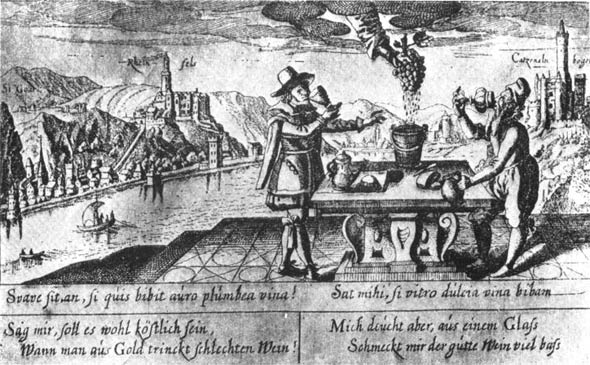
Lead poisoning was quite common in the early modern period, as lead was used in eating and cooking utensils, in water containers and in alcohol distillation equipment. Moreover, lead was sometimes deliberately added to wine to make it sweeter. This caused fast and severe, often lethal lead poisoning, that was also known as Poitou colic (after a particularly widespread case of lead poisoning by wine in the French city of Poitou in the 1720s) or painter’s colic  – painters were prone to lead poisoning because of the high levels of lead in many paints.[2]

A seventeenth century view of the Rhine Valley. The Latin legend reads: "is it sweet to drink bad wine from a golden cup? - I'd rather drink good wine from a glass". Note that when applied to wines, "plumbeus", literally leaden, has the meaning of poor or bad, here and in classical Latin. Source: http://www.nicks.com.au/Index.aspx?link_id=76.1221

A seventeenth century view of the Rhine Valley. The Latin legend reads: “is it sweet to drink bad/leaden (‘plumbea vina’) wine from a golden cup? – I’d rather drink good wine from a glass”. Source: http://www.nicks.com.au/Index.aspx?link_id=76.1221

By the mid-eighteenth century, it was commonly known that adding lead to wine was a dangerous practice, and as Gaub wrote, governments in wine-producing countries had set heavy penalties on it. However, his own tests revealed that even some of the Rhine and Moselle wines commonly drunk in the Netherlands contained lead anyhow. For a while, it was thought that lead could be detected in wine by mixing spiritus salis (hydrochloric acid) through it. But Gaub did his own tests and came to different conclusions.[3] It turned out that only lead dissolved in vinegar became visible as a white powder or turbidity when spiritus salis was added. Other forms of lead in wine, such as sugar of lead (lead acetate), lead white, minium (red lead), and lead oxide remained undetected.

The only reliable way to test wine for the presence of any form of lead, Gaub argued, was the already known method of using Atramentum Symphateticum, a tincture of arsenic sulphur and quicklime. In order to test wine for lead, a little wine was poured into a white cup and some drops of the Atramentum Symphateticum were added. If the wine went cloudy with a yellowish-red, brown or black colour, lead was present – the darker the colour the higher the lead contents. If the turbidity was whitish, there was no lead in it and it was safe to drink.

Gaub finished his treatise with some words of comfort. Although lead pollution did occur in Rhine and Moselle wines, it was not very common because of the laws and regulations in the German lands. Wine lovers should be wary of extremely sweet wines, as well as those that were uncharacteristically dark for their age, and wines of supposed high quality offered at a very low price. In case of doubt, they could rely on the Atramentum Symphateticum test, which, by the way, also worked for butter, which in times of scarcity was apparently also sweetened with lead.

This little treatise shows that an academic physician and chemist like Gaub also applied his knowledge for very practical purposes, and wanted to spread it for the common good. Moreover, it shows the historic realm of seemingly contemporary issues such as food safety and the relevance of science for society. Think about that, next time you have a glass of wine or put some butter on your bread!


[1] Gaubius, H.D. “Over de Loodstoffen. Aanwysing Van een Middel waar door men het Schadelyk mengsel van Loodstoffen in de Wynenmet genoegsaame zekerheid kan ontdekken.” Verhandelingen uitgegeeven door de Hollandsche maatschappye der weetenschappen te Haarlem 1 (1754): 112–126.

[2] Also see Eisinger, J. “Early Consumer Protection Legislation: a 17th Century Law Prohibiting Lead Adulteration of Wines”. Interdisciplinary Science Reviews 16, nr. 1 (maart 1991): 61–68.

[3] Gaubius (1754): 115.

A gemstone for every ailment?

Last week, I wrote about Boerhaave’s admiration for the stained glass windows in the St. John church in Gouda, and how his appreciation can be understood in the context of his life and times. Yet of course, the learned man did not write about stained glass windows in his chemistry book just because he thought they were beautiful. Always the scholar, Boerhaave had another reason to be interested in coloured glass, rooted in the medical and chemical theory of the day. In the Elements of Chemistry, Boerhaave described a number of ways to make coloured glass, but warns that this tends to result in artificial gems that, however lustrous, are more brittle than the real thing.[1]

Brooch, 1740-1750, Silver set with pastes (glass). Courtesy of the V&A (object nr. M.198-2007)

Brooch, 1740-1750, Silver set with pastes (glass). Courtesy of the V&A (object nr. M.198-2007)

Fake gemstones were used frequently in jewellery and fashion in the eighteenth century, but Boerhaave’s interest in them may still seem a bit curious. However, it is quite understandable in the light of a 1672 treatise by Robert Boyle, one of the alchemists Boerhaave admired. Boyle’s An essay, about the origine and virtue of gems argues that gem stones are infused with mineral and metal juices or particles when they are formed in the earth, either through great pressure, cold, or heat.[2]

These minerals and metals have medicinal qualities, and by grinding gemstones to powder, the medicinal qualities can be used in curative potions, creams, et cetera. But gemstones were rare, so it was beneficial for the early modern physician/chemist/natural philosopher to be able to create artificial gemstones with the same properties as real ones. As artificial gemstones are made mimicking the natural process, by infusing crystal with metals, it made perfect sense for Boyle, Boerhaave, and their contemporaries to use both natural and artificial gemstones as materia medica, basic medical materials.

Title page of Robert Boyle's 1673 'An essay, about the origine and virtue of gems.'

Title page of Robert Boyle’s 1672 ‘An essay, about the origine and virtue of gems.’

Artificial gemstones are an interesting case, as they shows that in the early modern period, the same artisanal and chemical knowledge and practices were relevant for experts in a number of fields, such as glassmaking, jewellery making, chemistry, pharmacy, and medicine. Often, these fields overlapped in more than one respect of course, and as I mentioned last week, studying the use of materials in the early modern period is a route into understanding the work of hybrid experts, people who combined artisanal and scholarly theories and practices.[3]

In the future, I hope to make the creation and use of gemstones in eighteenth-century chemistry and medicine one of the case studies in my research project. These initial findings raise questions about how involved university-trained chemists actually were in the making of materials such as artificial gemstones. Did they make them themselves in their laboratories? Or did they obtain them from glassmakers or apothecaries? And exactly how were the gemstones used in medicine and pharmacy? What were the various theories about their curative properties, and how were they transferred to the patient? Was the alchemical understanding of gemstones significantly different from the chemical understanding, or were alchemical theories and practices transferred into the chemistry and medicine of the late eighteenth century?

But first, summer, and on my program are a research trip to London, to look into a massive manuscript containing lecture notes taken by a student of the Leiden chemistry professor Hieronymus Gaub (1705-1780), presenting a paper at the huge and hugely exciting ICHSTM conference in Manchester, and delving into the work of Abraham Kaau Boerhaave (1715-1758), Boerhaave’s deaf nephew. I aim to keep the Medicine Chest filled with updates!


[1] Boerhaave, Herman. A new method of chemistry, 2 Vols, Vol. I, tranl. by Peter Shaw, London, 1741, p. 182-187.

[2] Boyle, Robert. An essay, about the origine and virtue of gems, London, 1673.

[3] Klein, Ursula, en Emma C. Spary. “Introduction: Why Materials?” In Materials and Expertise in Early Modern Europe. Between Market and Laboratory., Ursula Klein and Emma C. Spary (eds.), 1–23. Chicago and London: University of California Press, 2010, 1, 6.

Metals and chemical knowledge in unexpected places: stained glass windows

This week I am diverting a little from my usual focus – I just found this too fascinating not to share it. So far, I’ve mainly concentrated on the use of metals in medicine and chemistry. Yet of course, metals were used in numerous other ways in the eighteenth century. There are the obvious applications if making tools and instruments, for money, jewellery, locksmithing, and cutlery. Metals were also essential in other arts and crafts, such as the creation of (coloured) glass. This may seem utterly artisanal, but the skills and knowledge involved were indeed relevant for academic chemists as well, as shows form Herman Boerhaave’s 1732 chemistry handbook.

In a section of the use of chemistry for the arts and crafts, he devotes over six pages to making glass, and how to colour it. Partly this makes sense, as a chemist was (and is) dependent on glass objects such as phials and bottles.

Glass retorts used in the chemical laboratory, from Boerhaave, Elementa Chemiae.

Glass retorts used in the chemical laboratory, from Boerhaave, Elementa Chemiae.

For example, Boerhaave explains that experiments have been made to aggravate glass with lead, but that these have failed so far as the addition of the lead tends to make glass brittle, rendering it unusable. Yet why would an academic chemist be interested in applications such as the creation of coloured glass? Boerhaave writes admiringly about the ‘Gouda glasses,’ the stained glass windows in the St Jan church in Gouda:

“There is also a […] kind of painting, which represents things on glass the most beuatiful yet transparent colours: the wonders of this art we see in great perfection in the windows of a church at Guada in Holland; which no modern performance can come up to. By means of this art they lay colours on the surface of the glass, which being baked by force of fire, their former lustre improved, and their substance diffused to a perfect transparency, penetrates the body of the glass, yet without passing a hair’s breadth beyond their assigned limits, or blending with the adjacent ones. I scarce know of any thing more curious and beautiful, or that contributes more to the ornament of churches, halls, and other buildings. The recovery of this art, now almost lost, is hardly to be expected, except from some chemist who should apply the discoveries of his art to this use.”[1]

The birth of Jesus, window 12 in the St Jan church in Gouda, made in 1564.

The birth of Jesus, window 12 in the St Jan church in Gouda, made in 1564.

Subsequently, Boerhaave lists other uses of glass, and the various methods to make it, and how to colour it with different metals. His admiration of the Gouda windows is one of the few insights he gave into his personal preferences outside his professional life. To understand this rare expression of emotion on a subject so different from his usual discourse, it is important to keep two things in mind. First, as convincingly argued by Knoeff in her 2002 book on Boerhaave, the man was deeply devout. Although the church windows at Gouda also contained more worldly, politically inspired images, the biblical representations in the impressive windows must have moved a religious man in a predominantly Protestant country, in which religious pictures -unlike religious symbols- in the public domain were quite rare.

Secondly, the Gouda church windows were and are among the great monuments in the Netherlands. For Boerhaave, who hardly travelled and whose farthest journey had been to Harderwijk, about one hundred kilometres from Leiden, these windows must have been one of the most beautiful monuments he saw in his life.

However, Boerhaave’s knowledge about and admiration for the craft of glass staining in general and for the Gouda windows in particular also confirms recent scholarship on the boundary nature of early modern chemical and technical knowledge and practices. Studying the use of materials in the early modern period is a route into understanding  mixed artisanal and learned practices, and reveals the existence of what Klein and Spary call ‘hybrid experts,’ men and women who combined artisanal and scholarly skills, terms, reasoning and explanations.[2] The hybrid expertise of people like Boerhaave and his contemporaries in turn can give us insights in issues such as discipline formation, and the epistemological and socio-economical developments preceding the industrial revolution.


        [1] Boerhaave, Herman. Elementa chemiae, quae anniversario labore docuit in publicis, privatisque scholis. 2 vols, vo.l. I, Leiden: Isaak Severinus, 1732, p. 180 cont.

[2] Klein, Ursula, en Emma C. Spary. “Introduction: Why Materials?” In Materials and Expertise in Early Modern Europe. Between Market and Laboratory., Ursula Klein and Emma C. Spary (eds.), 1–23. Chicago and London: University of California Press, 2010, 1, 6.

Dark tourism past and present

Last Saturday, the Travel section of my Dutch newspaper, the Volkskrant, featured a short article on ‘dark tourism,’ the phenomenon of people leisurely visiting places that are reminders of death, suffering or the macabre. Examples are Auschwitz, the Anne Frank house and graveyards, but also the Body Worlds exhibitions. According to Philip Stone, director of the recently established Institute for Dark Tourism Research (iDTR), dark tourism is increasing in popularity, something he ascribes not only to marketing but also to secularization. As churches empty, people seek other places to think about life and death, good and evil, he suggests in the article.

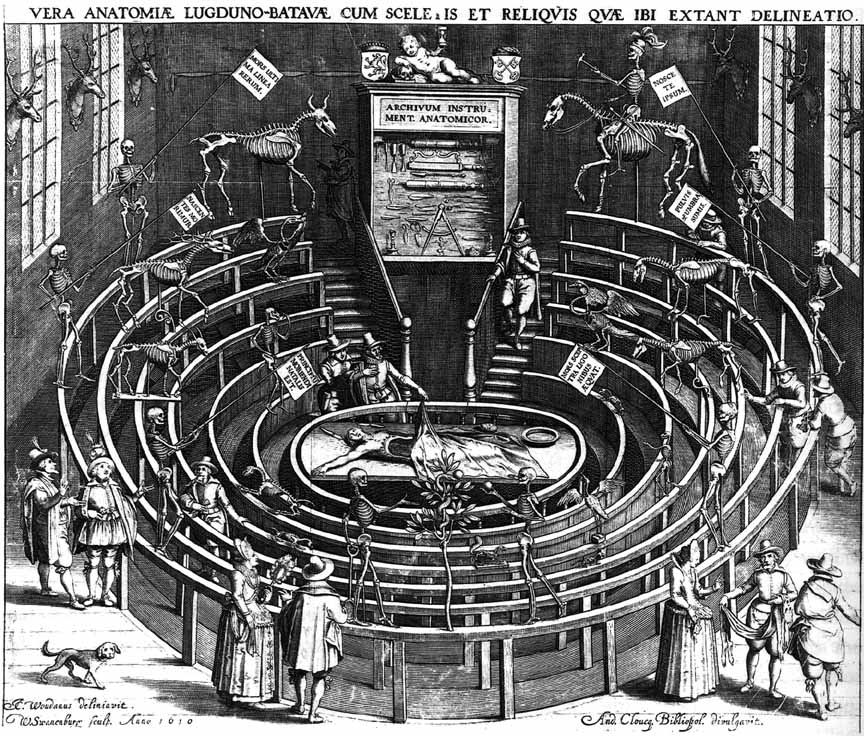
However, if I learned anything while writing a PhD thesis about eighteenth century anatomical collections, it is that there is nothing new about dark tourism. In seventeenth- and eighteenth century Leiden for example, the anatomical theatre and its collections were one of the biggest tourist attractions. Guides were published in Dutch, Latin,

Visitors can be seen strolling around and pointing out things to each other. The dissected body on the table is unlikely to have been there during the summer tourist season in reality, as dissections were normally only performed during the cold winter months.

Visitors can be seen strolling around and pointing out things to each other. The dissected body on the table is unlikely to have been there during the summer tourist season in reality, as dissections were normally only performed during the cold winter months.

English and French, and paying visitors could join guided tours. These visitors could of course use the opportunity to learn something about human anatomy, but they were also treated to stories relating to the exhibits, such as that of the skeleton of a woman who had been condemned to death for theft. This Catherine of Hamburg allegedly bought a length of ribbon at a market in Amsterdam, measuring from one ear to the other – a standard length. However, after the purchase, she claimed that one of her ears was nailed to the pillory in Hamburg. [1] Although visitors found stories like this one hard to believe sometimes, most of them did not seem to mind a little stretching of the truth if there was a moral lesson or just entertainment.[2]

Title page of an English visitor's catalogue to the Leiden Anatomical theatre, 1727.

Title page of an English visitor’s catalogue to the Leiden Anatomical theatre, 1727.

Yet in the course of the eighteenth century, the attraction of this kind of ‘dark tourism’ was changing, at least in the case of the Leiden anatomical collections. For example, an English visitor who described his stay in Leiden in 1775 stated that “…you must not fail to see the Anatomy-chamber”, but adds this is mainly because that is where “they preserve the money of Egypt; Pagan idols, –foreign dresses, birds from China, &c, &c.” Not a word about anatomical preparations or moral lessons.[3] This indicates that the anatomical theatre to tourists had become a cabinet of curiosities instead of a place to learn about human anatomy and morality. The curators also realized this, and from the last decades of the eighteenth century, the collections were partly handed over to other institutions, such as the newly established museum for antiquities, and the anatomical theatre slowly changed from an open-for-all public attraction into a closed teaching institution.[4]

This story about the Leiden collections shows that what is considered ‘dark’ can change over time, and that the reasons people visit these places vary. Then as now, some want to contemplate life and death or morality, others want to be entertained or learn something about the human body or human behaviour. My guess is that in order for a ‘dark tourism attraction’ to be successful in any time, visitors need to be able to relate to what is on show, or the people whose stories are told by and in that place – hence the massive success of the Anne Frank house and Body Worlds. As long as the story is a universal human one, and credible, visitors will continue to come.


[1] Uffenbach, Conrad Zacharias. Merkwürdige Reisen durch Niedersachsen, Holland und England. 3 vols. (Frankfurt/Leipzig, 1753).

[2] Knoeff, R. ‘The Visitor’s View. Early Modern Tourism and the Polyvalence of Anatomical Exhibits’, in L. Roberts (ed.), Centers and Cycles of Accumulation in and around the Netherlands during the Early Modern Period  (Münster: LIT Verlag, 2011), pp. 155-175, 166-7.

[3] Anonymous. Holland: A Jaunt to the Principal Places in That Country. London: W. Hay, 1775.

[4] M.M.A. Hendriksen, H.M. Huistra & H.G. Knoeff, ‘Recycling Anatomical Preparations’, in: S. Alberti and E. Hallam (eds.) Medical Museums, Royal College of Surgeons of England. (Order here) Also see Hendriksen, M. Aesthesis in Anatomy. Materiality and Elegance in the Eighteenth-Century Leiden Anatomical Collections. PhD thesis, Leiden University, 2012.

Mercury: back to the source

Over the past few months, as I learned more and more about the use of quicksilver in eighteenth-century chemistry and medicine, I became increasingly curious about the origins of all this mercury. The chemistry of the eighteenth century was a science of materials, materials that allowed various ways of inquiry: descriptions were made, technological possibilities explored and philosophical reasoning applied. However, we should not forget that in early classical chemistry, all chemical substances were useful materials produced in mining, metallurgy and pharmacy.[1] So where did a useful chemical material like mercury come from? In his book De Mercurio Experimenta, Boerhaave mentioned that he acquired sixteen ounces of quicksilver for his experiments at ‘the Company at Amsterdam.[1]

That must have been one famous company, if Boerhaave only needed to refer to it as ‘the Company at Amsterdam’ in the transactions of the Royal Society. It was indeed. I soon found out that at the time Boerhaave was writing this, the company of the Amsterdam Deutz family had almost exclusive rights to the trade in mercury in the Low Countries, and even in Europe. The most important quicksilver mines in Europe were those in Idria in the Habsburg Empire (now in Slovenia and spelled Idrija).

Copper engraving of Idrija, including the mercury mine, by Janez Vajkard Valvasor (published in his The Glory of the Duchy of Carniola), 1689

Copper engraving of Idrija, including the mercury mine, by Janez Vajkard Valvasor (published in his The Glory of the Duchy of Carniola), 1689

In the mid-seventeenth century, the Habsburg emperor monopolised the entire mercury mining and trade business of Idria, and in 1669 appointed a limited number of ‘factors’ in Venice and Amsterdam, who had the exclusive right to trade the imperial mercury. This situation would persist more or less unchallenged until 1741.[2]

The Amsterdam factor was Jean Deutz (1618-1673), a rich merchant originally from Cologne. After his death, first his son Jean (1655-1719) and subsequently his grandson Willem Gideon (1697-1757) took over the factorship. Because of the their monopoly, Amsterdam was the international trade centre for mercury, and the production centre of vermilion (a red dyestuff produced from sulphur and mercury) and mercurial salts in Boerhaave’s time. Although local apothecaries and assayers would also stock mercury, for the relatively large amount of pure mercury Boerhaave required – 16 ounces, which, in today’s weight, would be almost 500 grams -, the Amsterdam company was apparently the most trusted supplier.

However, in Deutz’s perspective, 16 ounces was hardly business. Mercury was used in

Anonymous - Portrait of Jean Deutz (1618-1673)

Anonymous – Portrait of Jean Deutz (1618-1673)

much larger quantities in all kinds of industries, such as felting (done by hat makers who frequently suffered mercury poisoning, hence the expression ‘mad as a hatter’), glass and mirror making and the dye industry. But the price of mercury was largely defined by the demand of the mining industry, as mercury was used to mine gold and silver.[3] Deutz gave massive loans to the Emperor, in return for which he would receive a set amount of mercury each year, which he sold for huge profits. Around 1706, when the Amsterdam monopoly was somewhat shaken by English imports of mercury from China, the sales of eight hundred 150 pound kegs of quicksilver a year still supplied the Deutz company with an annual income of about 225,000 guilders.[4]


[1] Klein, Ursula, en Wolfgang Lefèvre. Materials in Eighteenth-Century Science. A Historical Ontology. Cambridge, MA: MIT Press, 2007, 1,2. Klein, Ursula. “Objects of inquiry in classical chemistry: material substances”. Foundations of chemistry: philosophical, historical and interdisciplinary studies of chemistry 14, nr. 1 (april 2012): 7–23, 13-14.

[1] Boerhaave, Herman. Some experiments concerning mercury. By J.H. Boerhaave, professor of physick at Leyden. Translated from the Latin, communicated by the author to the Royal Society 1734. (London: J. Roberts, 1734), 16.

[2] By purchasing the complete stock of the Venice factor, Deutz created a virtual monopoly. See H.W. Lintsen (ed.), Geschiedenis van de techniek in Nederland. De wording van een moderne samenleving 1800-1890. Deel IV. Delfstoffen, machine- en scheepsbouw. Stoom. Chemie. Telegrafie en telefonie. (Walburg Pers, Zutphen 1993), 161, and C.K. Kesler, “Amsterdamsche Bankiers in de West in de 18e Eeuw”. Nieuwe West-Indische Gids 8, nr. 1 (1927: 499–516), 503-4.

[3] Mercury was, and is still sometimes used to extract gold or silver from ores. See http://www.miningfacts.org/Environment/Does-mining-use-mercury/

[4] Elias, Johan E. De Vroedschap van Amsterdam, 1578-1795. Vol. 2. 2 vols. Haarlem: Vincent Loosjes, 1905, 1046-50.